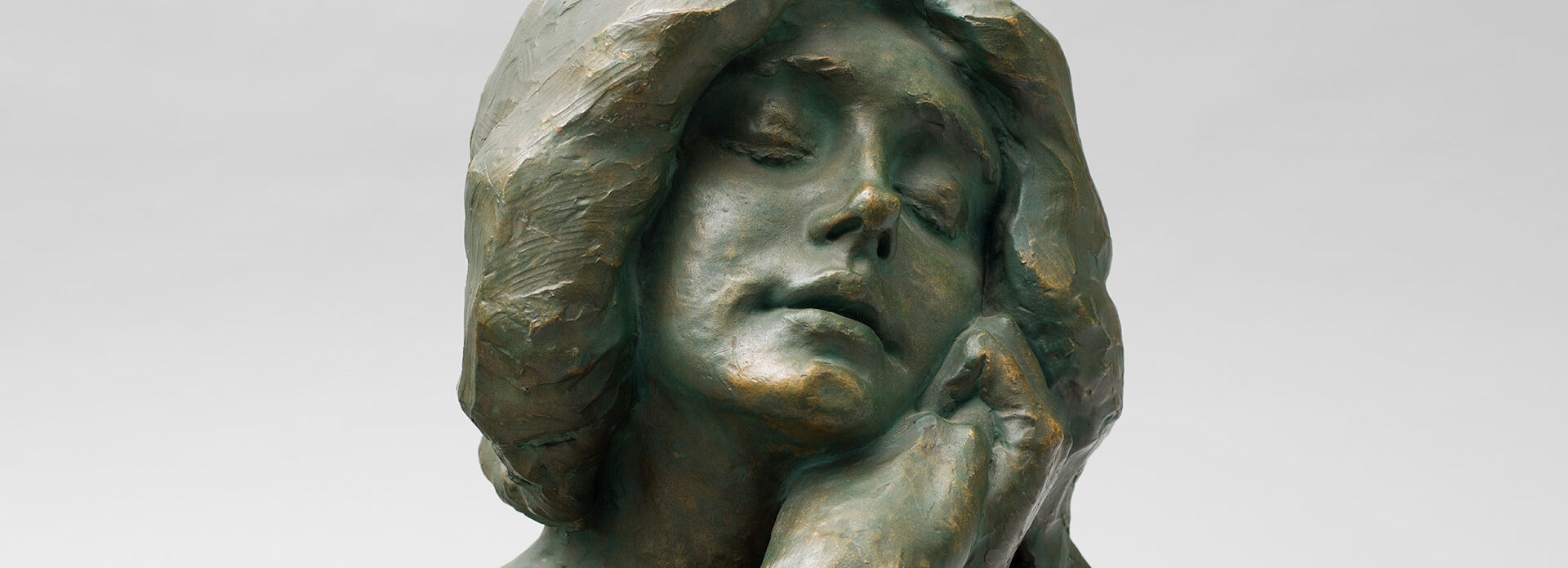
This project focuses on the sculptor Alice Nordin and emotions as an artistic expression. The research examines Alice Nordin’s life and artistic practice from an art historical, cultural and intellectual historical, and biographical perspective. The primary material consists mainly of Alice Nordin’s extensive personal archive (KvinnSam, University of Gothenburg Library), as well as her preserved artworks.
Alice Nordin (1871–1948) was one of the most successful woman artists and commissioned sculptors in Sweden at the beginning of the twentieth century. Despite this, she has been remarkably little explored. Previous works on Alice Nordin include Alice och Hjördis. Två systrar. Dagböcker och brev 1885–1964, selected by Per Wästberg (1994), and Irja Bergström’s studies, above all Skulptriserna, Alice Nordin och hennes samtida 1890–1940 (2012).
The Research Project
A central theme throughout this project is emotion. Its aim is to explore Alice Nordin’s artistic practice and role as an artist through the concept of emotion, linked to sensuality and mental health. Within art historical research, the biographical and emotional perspective has often been downplayed or reformulated, based on the argument that the artist and the artwork should stand on their own.
In this project, I seek to restore the importance of emotion – both as personally experienced and as culturally shaped – as a foundation for understanding the creative process and artistic expression. Of crucial importance is also sculpture as a medium, and the sculpted body as a carrier and expression of emotions.
Who Was Alice Nordin?
Alice Nordin was educated at the Technical School and at the Royal Academy of Fine Arts from 1890 to 1896, where she was awarded both the Ducal and the Royal Medal. These awards enabled further studies abroad, and she soon received public commissions. She was frequently commissioned as a portrait sculptor and also produced several grave monuments and architectural decorations.
Her sculptures and objects were reproduced in bronze at Herman Bergmans konstgjuteri, and several statuettes were reproduced by Gustavsberg porslinsfabrik, allowing them wide distribution. Alice Nordin was also a pioneer in the applied arts; she designed lamps both for Bergman and, from 1906, for Böhlmarks lampfabrik, where she was the only designer allowed to sign her work
Alice Nordin lived an independent life for her time, with many travels. She was also a prolific writer: she gave lectures on art and wrote articles for the magazine Idun, which contributed to her popularity. In 1905 she was chosen to represent Art in “Kvinnornas akademi” (the “Women’s Academy”) and in 1911 she became the first woman sculptor to hold a solo exhibition at Konstnärshuset (the Artists’ House) in Stockholm. The exhibition was a great success. Alice Nordin continued to exhibit and participated in all major exhibitions in Sweden from 1900 onward.
Music was important to Nordin, which is particularly evident in her encounter with the composer Hugo Alfvén (1872–1960), whom she met in Paris in the spring of 1898. This meeting had a profound impact on her for several years and resulted in works such as a pair of female busts, with closed eyes and heads tilted back, as if listening. The sculpture was titled Andante Patetico, after the slow third movement of Hugo Alfvén’s Violin Sonata Op. 1. Alfvén, too, was influenced in his creative work by personal encounters, as well as by international trends in culture and philosophy (Tobias Lund, Speltoken, 2022).
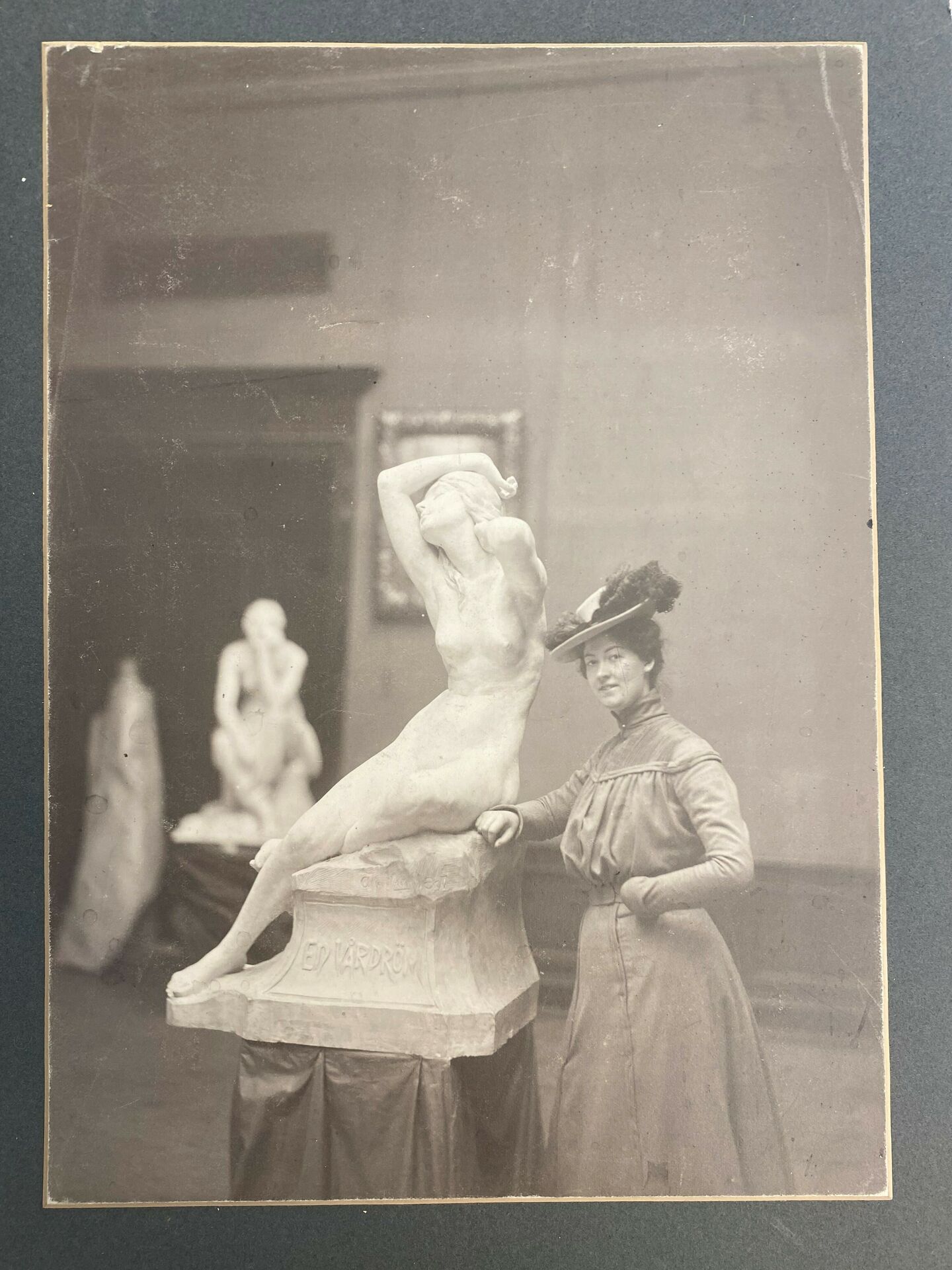
Alice Nordin beside her sculpture A Spring Dream, which won the Royal Medal at the Royal Academy of Fine Arts in 1897. The sculpture’s current location is unknown. Photo: Alice Nordin’s archive, KvinnSam, University of Gothenburg Library.
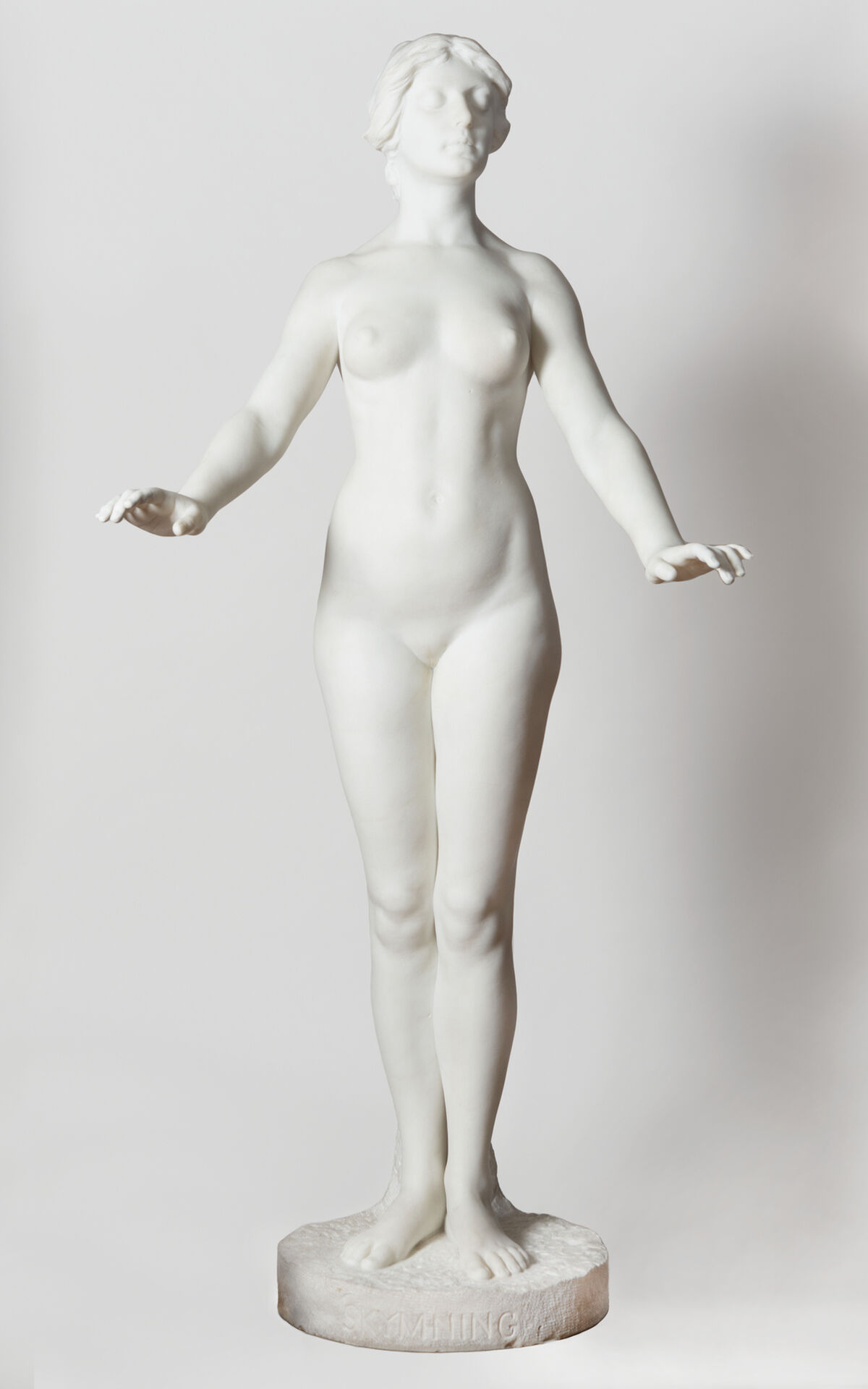
Alice Nordin, Twilight, 1904 (model 1895). Marble. NMSk 1228.
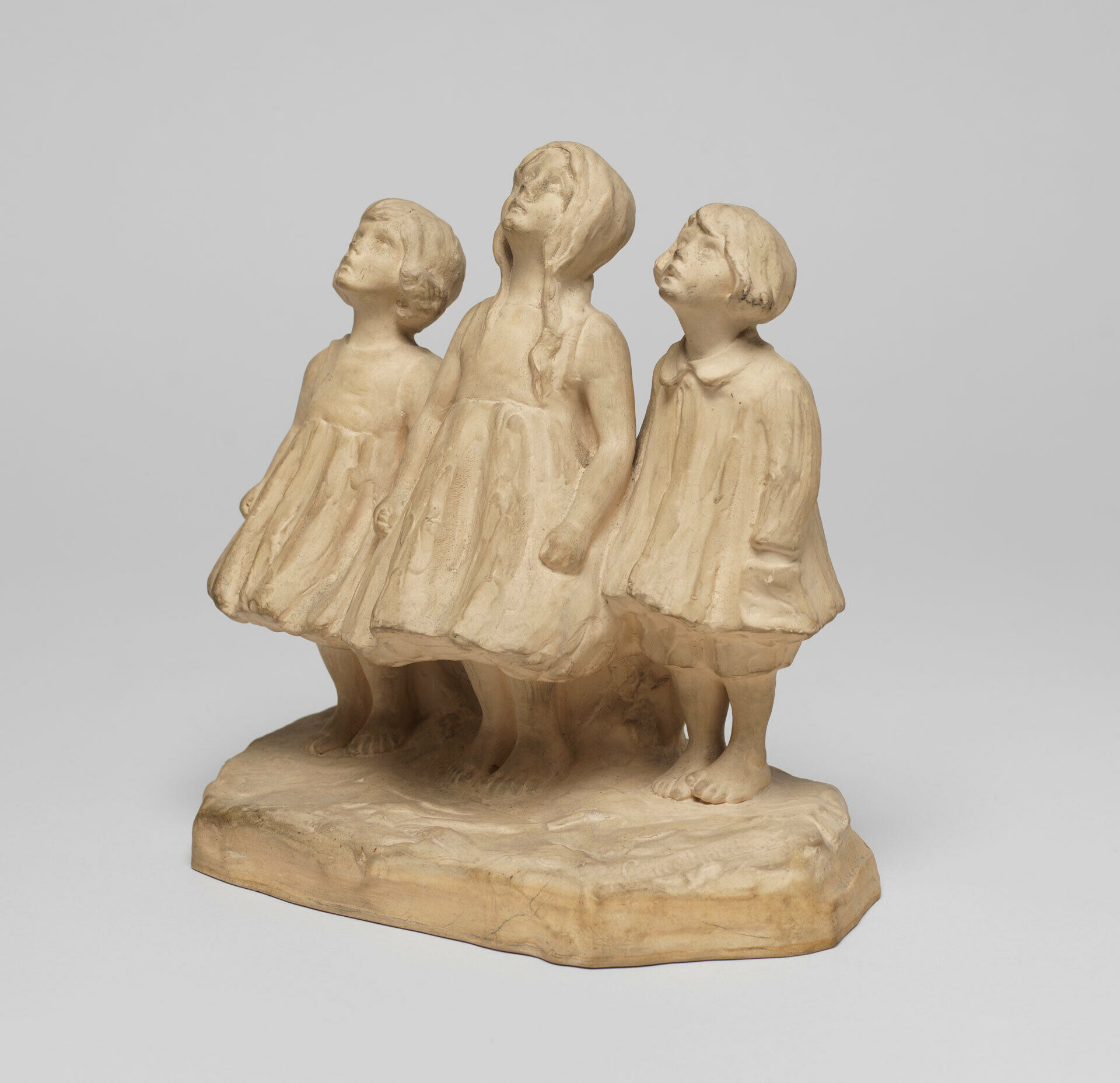
Alice Nordin, Child Watching the Wild Geese, 1911. Terracotta. NMSk 2411
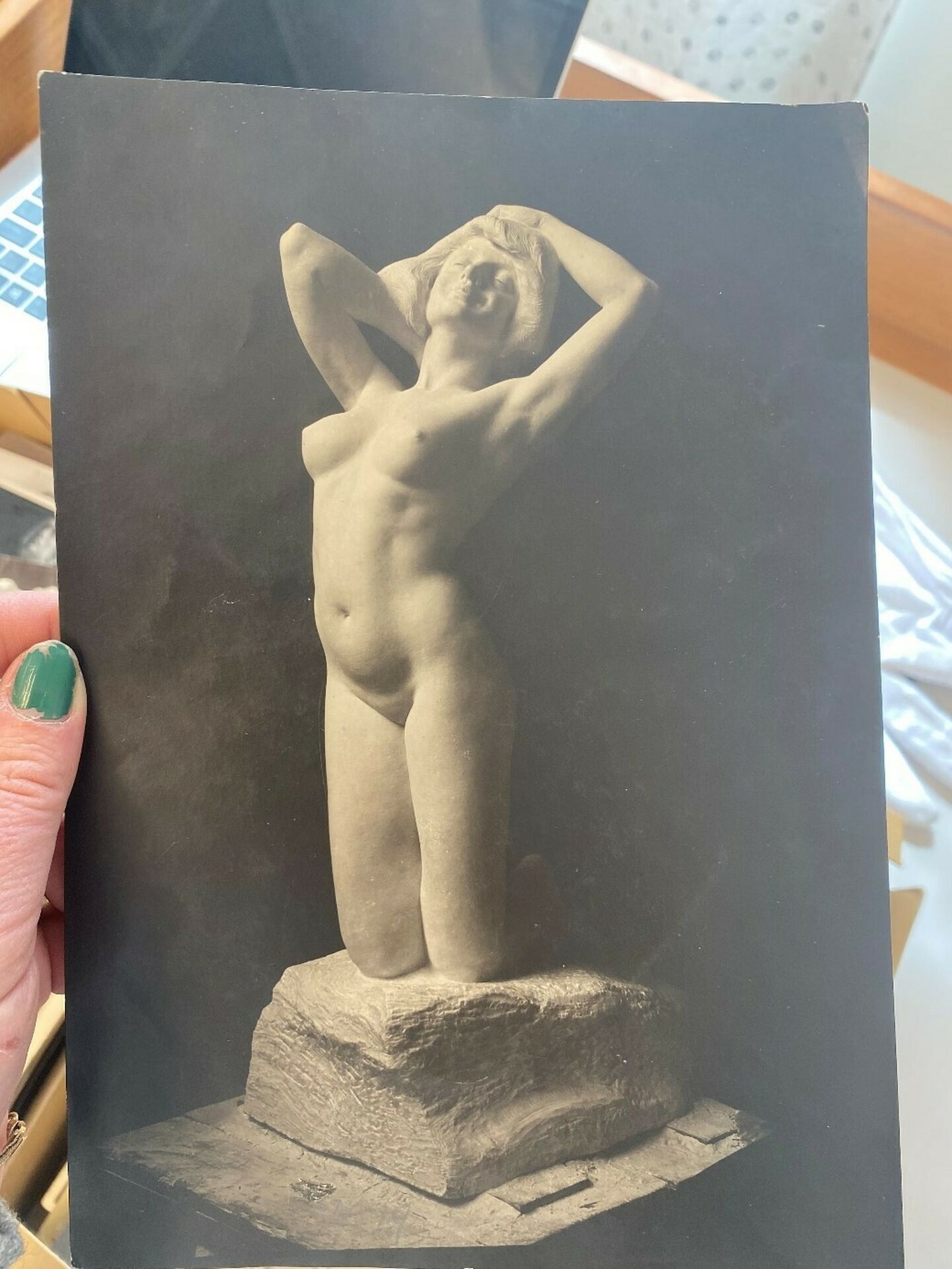
Alice Nordin, Praise to Nature, 1907 (model). Marble. NMSk 2423.
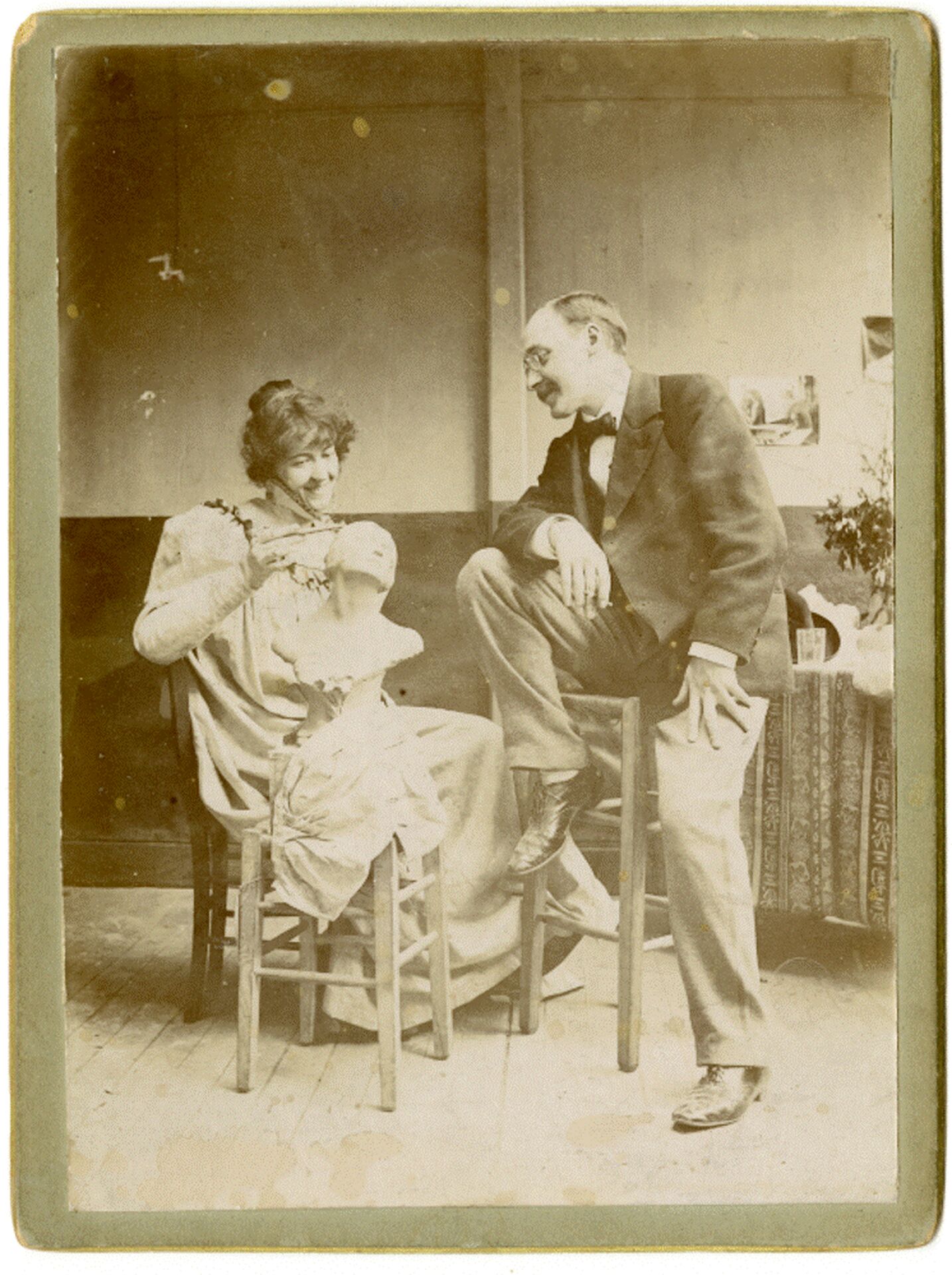
Alice Nordin and Hugo Alfvén (1872–1960) in Paris, spring 1898. Photo: Alice Nordin’s archive, KvinnSam, University of Gothenburg Library.
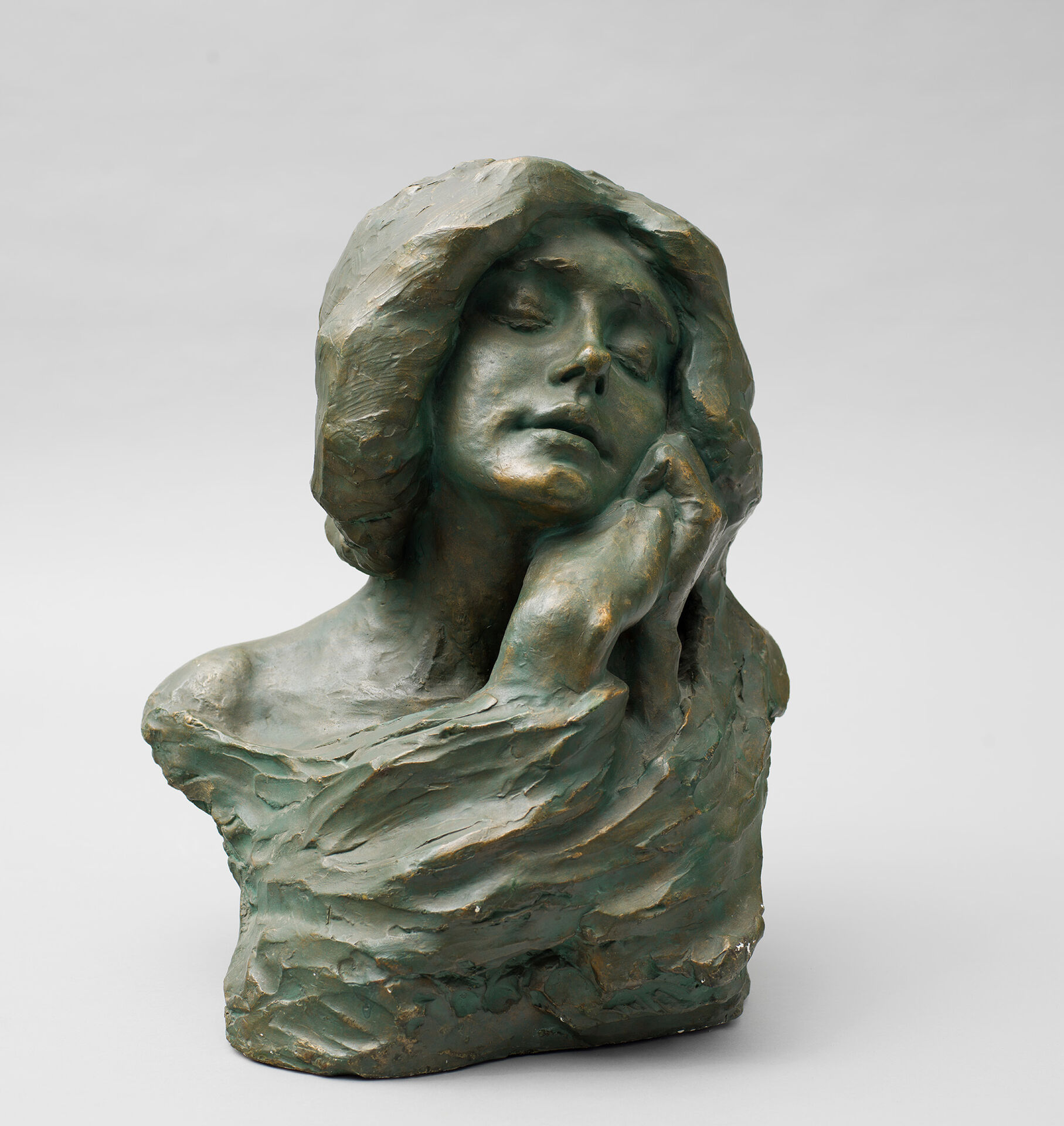
Alice Nordin, Andante Patetico (variant), ca. 1911. Patinated plaster. NMSk 2395.
Structure of the Study
The study aims to interpret Alice Nordin in relation to the concept of emotion, in order to broaden perspectives and deepen the understanding of her artistic practice. Personally experienced emotion – expressed in letters, diaries, and other texts – is interpreted in terms of its significance for the artist’s creative expression, but also in relation to broader contemporary cultural and philosophical ideas about the influence of emotional life on human beings and about emotion as a creative force. The project also requires an examination of the concept itself. What did love and sexuality mean during the time in which Alice Nordin lived and worked? These ideas can be found in the writings of philosophers such as Friedrich Nietzsche, but also in Ellen Key, whom Nordin referred to. The study also emphasizes empathy and emotional experience in other art forms, such as music, and the cross-fertilization between them for a deeper and more intimate artistic experience. These ideas were particularly strong around 1900. In this context, a conference on art and music around the turn of the 20th century was organized in the autumn of 2024. The aim of the study is to result in a number of articles and a biography of the artist Alice Nordin.
The project is supported by research funding from Nationalmusei Vänner.
Contact
linda.hinners@nationalmuseum.se
Do You Own a Work by Alice Nordin?
Your help is needed to map Alice Nordin’s production. If you are aware of sculptures, drawings, sketches, photographs, letters, or other archival material related to the artist – please contact curator Linda Hinners at linda.hinners@nationalmuseum.se.