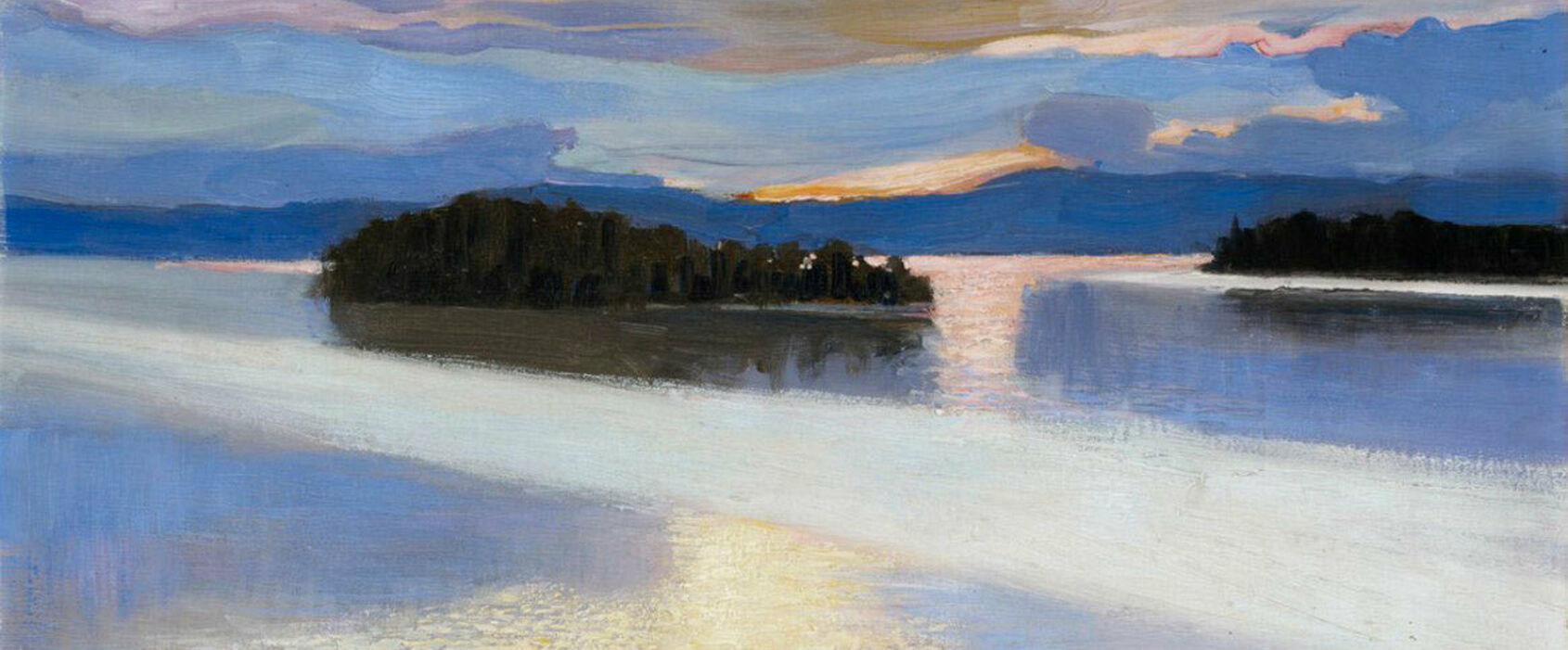
The Finnish artist Akseli Gallen-Kallela was one of the leading Nordic artists around the turn of the 20th century. In spring 2027, Nationalmuseum will present the largest exhibition of his work ever shown in Sweden – a world of images where nature, myth, and national identity converge.
The Finnish artist Akseli Gallen-Kallela was one of the leading artists in the Nordic region at the turn of the 20th century. In Finland, he was a central figure during a period often regarded as a national golden age of art, and several of his paintings are among the country’s most popular. In recent years, Gallen-Kallela’s art has been featured in major, highly acclaimed exhibitions in cities such as Paris and Vienna. In spring 2027, Nationalmuseum will host the largest presentation of Gallen-Kallela’s art to date in Sweden, featuring many of the artist’s most famous works. Step into a fascinating visual world where nature and myth are interwoven with questions of national independence and identity!
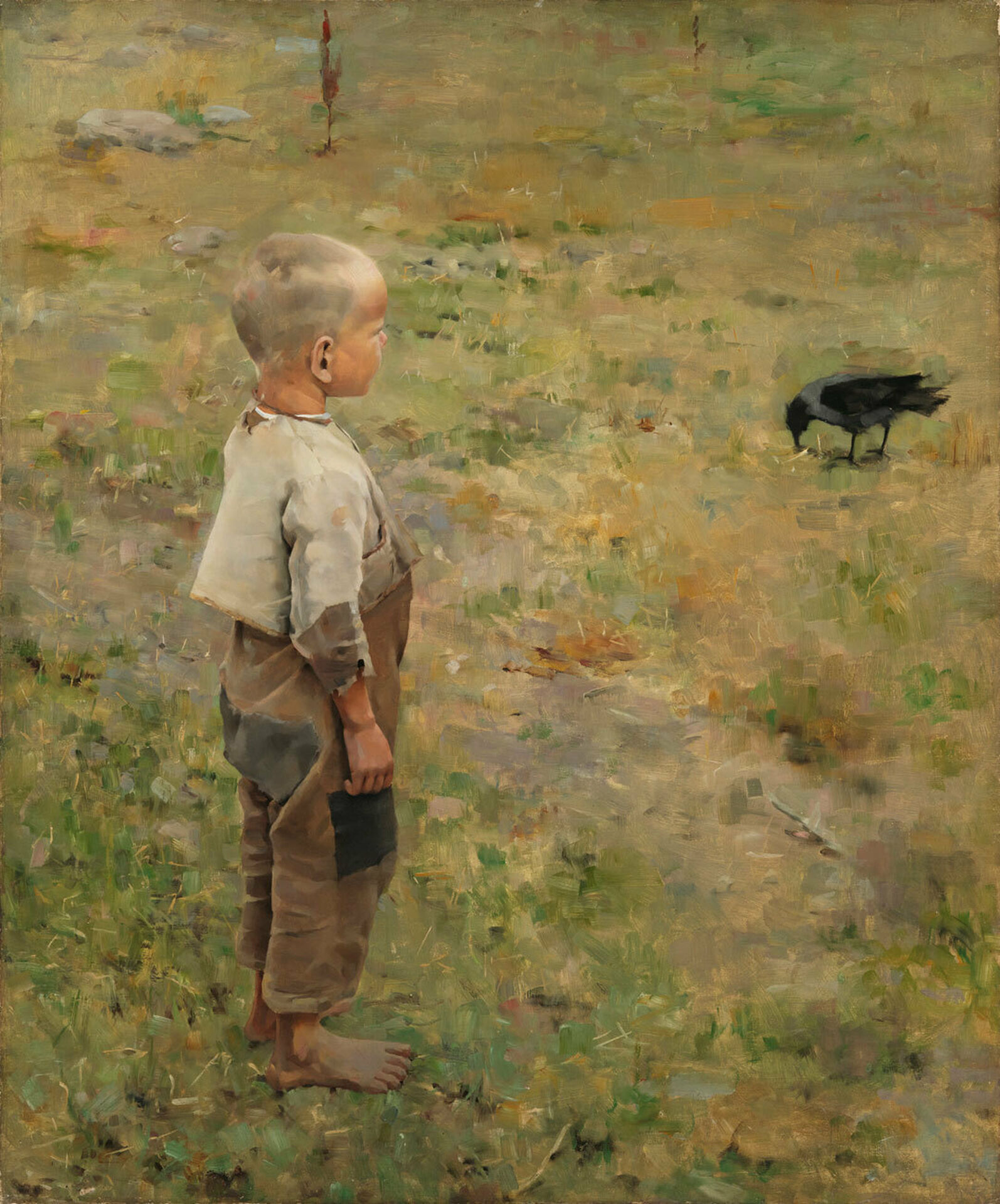
Akseli Gallen-Kallela, Boy with a crow, 1884. Oil on canvas. Finnish National Gallery Collection / Ateneum Art Museum, Antell collections.
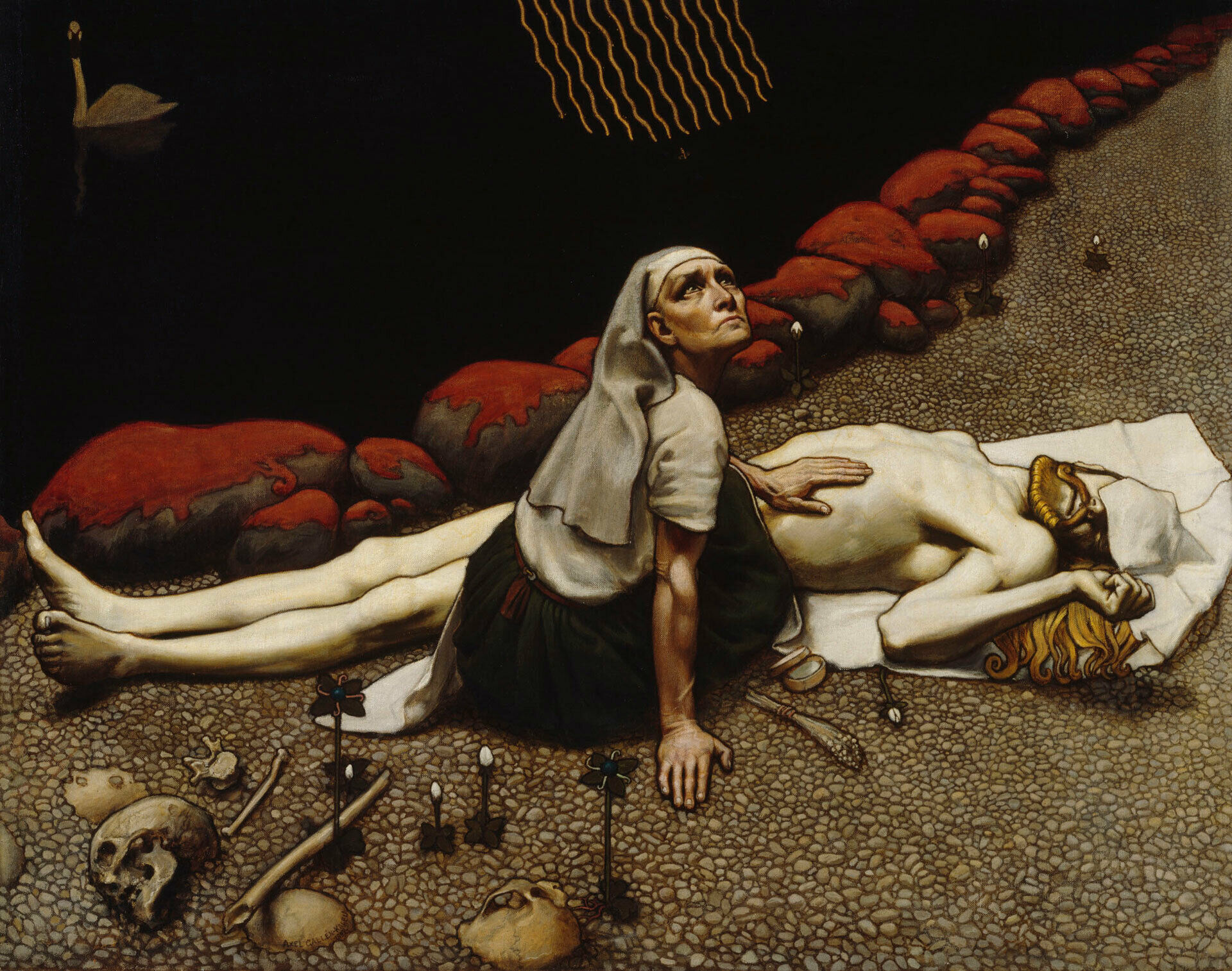
Akseli Gallen-Kallela, Lemminkäinen's Mother, 1897. Tempera on canvas. Finnish National Gallery Collection / Ateneum Art Museum, Antell collections. Phto: Finnish National Gallery / Hannu Pakarinen.
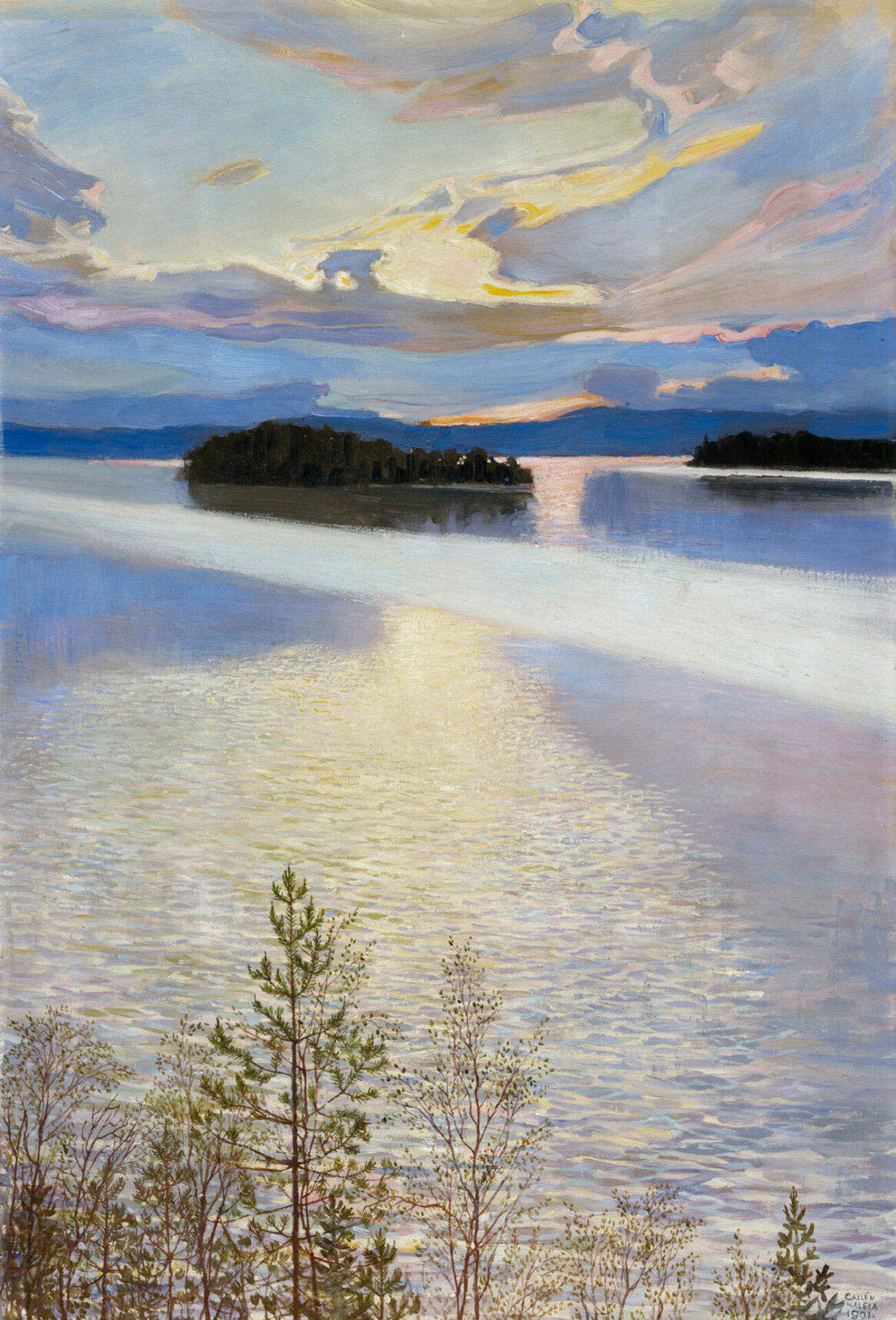
Akseli Gallen-Kallela, Lake view, 1901. Oil on canvas. Finnish National Gallery Collection / Ateneum Art Museum.
The exhibition's opening theme explores how Gallen-Kallela encountered French naturalism in Paris during the 1880s. This movement focused on depicting reality as it was, without embellishment. He subsequently applied the lessons learned in France to depict nature and people in the Finnish countryside.
During the 1890s, Gallen-Kallela was one of the Finnish artists who created new art based on the national cultural heritage. The myths of the Kalevala epic became a central theme in his art. The figures of the Kalevala – such as Aino, Lemminkäinen and Kullervo – are depicted in colourful and dramatic paintings.
The exhibition also highlights Gallen-Kallela’s involvement in the arts and crafts movement. His studio-home Kalela in Ruovesi and his family life with his wife Mary also play a significant role. The exhibition shows how they viewed their home as a total work of art, where furniture, textiles and other craft objects came together to form a unified whole.
The exhibition also explores Gallen-Kallela’s travels to East Africa (present-day Kenya) in 1909–10 and to the USA (Chicago and Taos, New Mexico) in 1923–26. During these journeys, he developed a more intense colour palette and an expressionist style.
Gallen-Kallela was a Swedish speaker and had strong ties to Sweden, where he had many Swedish artist friends such as Nils Forsberg, Albert Engström and Louis Sparre. Gallen-Kallela died in 1931 at the Hotel Reisen opposite Nationalmuseum, on the other side of the Strömmen waterway.