Publicerad 2026-08-31
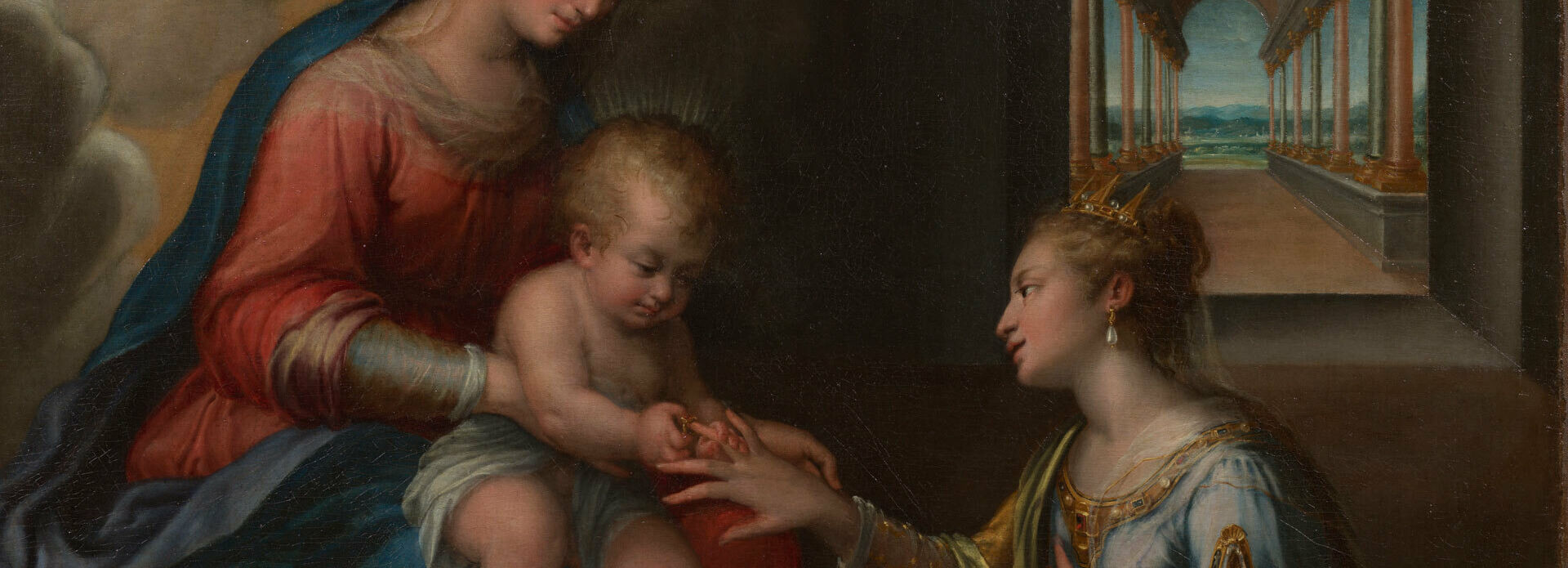
Nationalmuseum has purchased a previously unknown artwork by the Italian Renaissance artist Lavinia Fontana. Fontana was one of the most successful Italian painters working in the late 16th and early 17th centuries and is considered one of the first professional woman painters. The painting is an altarpiece depicting the mystical marriage of Saint Catherine of Alexandria.
The altarpiece by the Italian artist Lavinia Fontana has belonged to an Italian private collection since the late nineteenth century and has therefore previously been unknown to the art world. The work was painted in 1607 and is remarkable for the exceptional quality that Fontana, at the height of her career, achieved through her complete mastery of form and colour. It is an important and rare addition to Fontana’s oeuvre and, at the same time, one of the artist’s most ambitious religious compositions.
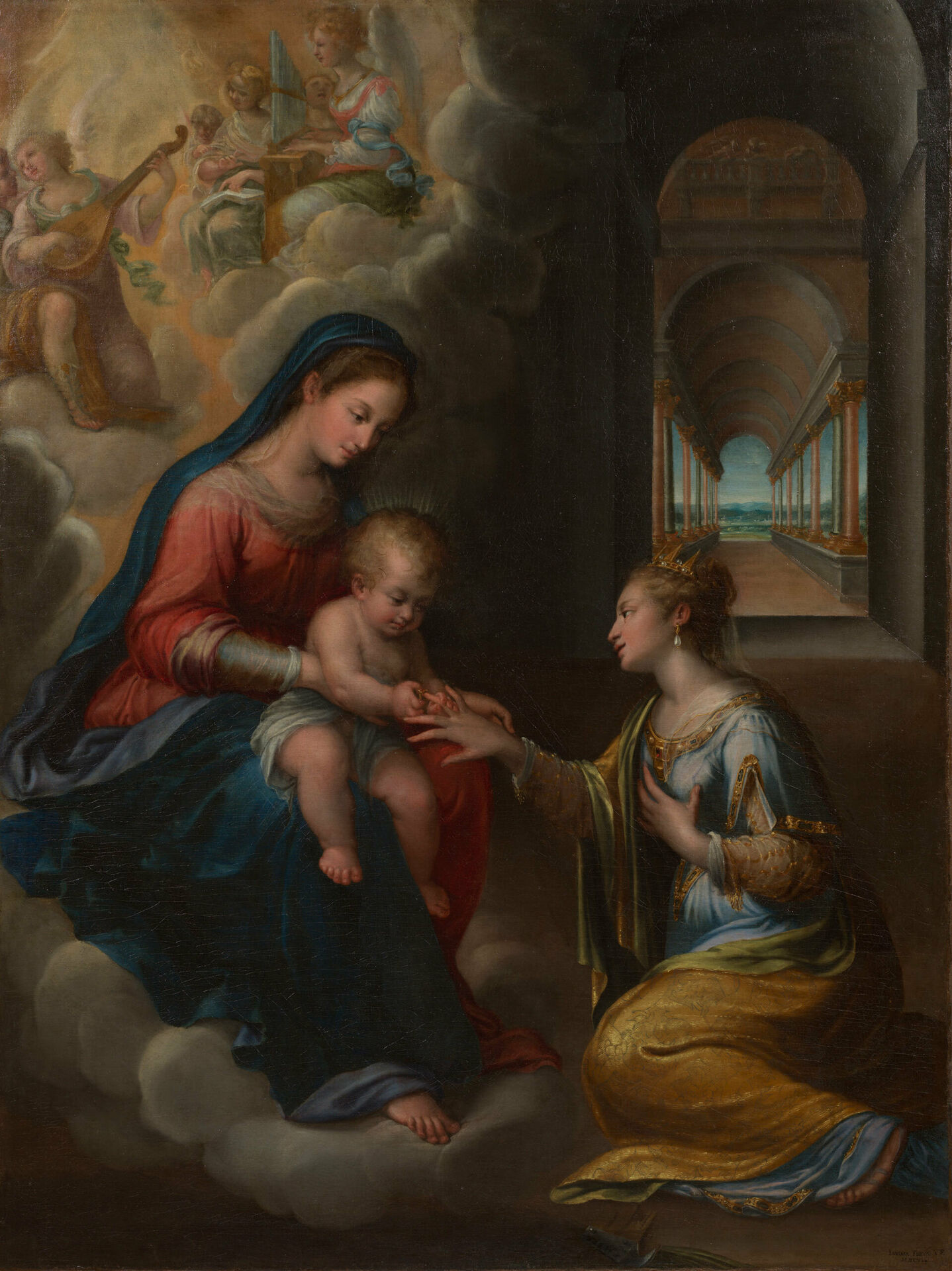
Lavinia Fontana, The Mystic Marriage of Saint Catherine of Alexandria, 1607. Oil on canvas. 158 x 119 cm. NM 7736. Foto: Cecilia Heisser/Nationalmuseum
In a palatial interior, the Virgin and Christ Child appear in a vision to Saint Catherine of Alexandria with whom, according to legend, the Child was betrothed. Fontana’s interpretation of this popular motif is devout, intimate, and naturalistic. While the saint’s elegant dress and pose reflect 16th-century painting, the natural expression of the Child impresses as he places the ring on the saint’s finger under his mother’s watchful gaze. The painting exemplifies Fontana’s late style with its harmonious colour relationships and soft transitions between light and shadow.
Lavinia Fontana (1552–1614) was born in Bologna. She is considered one of the the first professional woman painters of the Italian Renaissance, an internationally renowned precursor who paved the way for later generations. As the daughter of the painter Prospero Fontana, she was fortunate enough to be trained by her father. In 1577, she married Gian Paolo Zappi, a minor nobleman and painter, who became her artistic agent. Thought to have been the first professional woman to run her own studio, Fontana financially supported her husband and the couple’s eleven children working as a painter.
An ambitious artist, Fontana soon established herself as a popular portraitist in her native Bologna, patronized by university scholars and the local nobility. She also painted many small-scale devotional pictures, as well as larger mythological works and altarpieces. Whereas her portraits reflect a traditional specialization for women artists in this period, her activity as a religious painter was unprecedented, especially her many public commissions for large-scale altarpieces. Around 1590, Fontana had received her first papal commission, and in 1603 she moved her family to Rome in search of new opportunities, becoming one of the first women accepted to the prestigious Accademia di San Luca.
The acquisition, made possible by a donation from the Sophia Giesecke Fund, is part of the strategy of Nationalmuseum to add works by women artists to the collections. It complements the works by Sofonisba Anguissola and Artemisia Gentileschi that the museum has acquired in recent years.
The painting will be on view in the galleries from September 1st.
More news from Nationalmuseum
- Stellan Skarsgård has won the public vote! His portrait to be added to the National Portrait Gallery publicerat 2026-02-20
- Portrait of Honour 2025: Sarah Sjöström publicerat 2025-11-13
- Nationalmuseum in Stockholm acquires a painting by Sofonisba Anguissola publicerat 2025-09-16
- Portrait of Honour 2024: Max Martin by Mikael Jansson publicerat 2024-10-08
- A painting in the collections of the Nationalmuseum recently attributed to the famous artist Carel Fabritius publicerat 2024-05-22