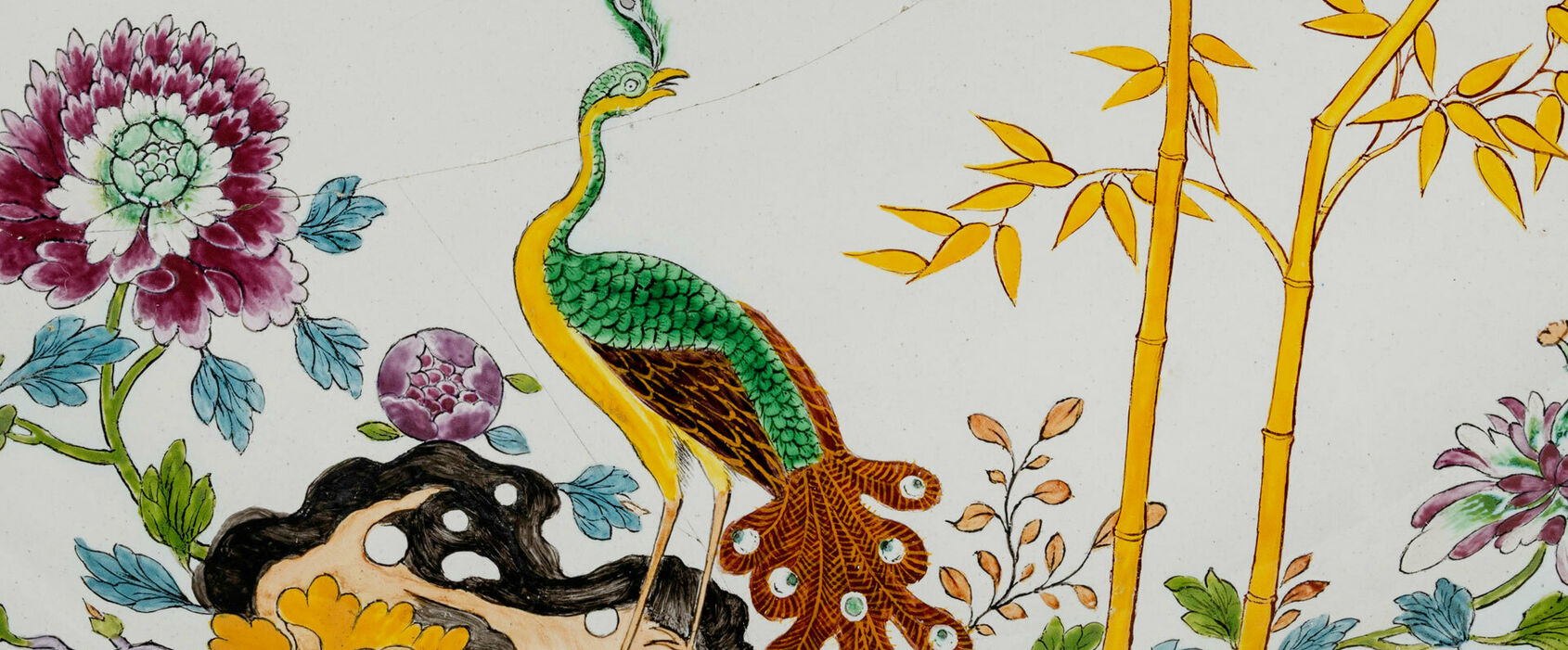
In the summer 2026, Nationalmuseum, in partnership with the Läckö Castle Foundation, presented an exhibition entitled 300 years of Rörstrand – treasures from Nationalmuseum’s collections at Läckö Castle. It showcased a rich selection of four centuries of form and colour from Nationalmuseum’s extensive collection of ceramics.
Sweden’s oldest porcelain factory, Rörstrand, was founded in Stockholm in 1726. It relocated to Gothenburg in 1926 and to Lidköping in the 1930s. Rörstrand is a vital part of Swedish design history; this exhibition offered glimpses of a fascinating heritage that ended in 2005, when the factory in Lidköping closed.
In the 18th century, faience production was one element of the Swedish state’s desire to improve the country’s economy and avoid expensive imports, with tax regulations and other privileges as incentives. Faience objects from this period were included in the exhibition. They radiate vivacity and joy, reflecting the spirit of the era. The painters used a rich colour palette, captivating the market for most of the 18th century.
The unique objects collected by Nationalmuseum since 1885 also illustrate the 19th and 20th centuries’ ambition of reaching out to a wider audience through its exhibitions. Works signed by Rörstrand’s popular designers from the 20th and 21st centuries were also on display, with artists that include Alf Wallander, Gunnar Nylund, Isaac Grünewald, Marianne Westman, Inger Persson, Signe Persson-Melin, Pia Törnell and Jonas Bohlin.
The visitors to the castle were invited to a journey of discovery that featured both well-known and lesser-known designers, with some objects that were being exhibited for the very first time.
Exhibition curator: Micael Ernstell, Nationalmuseum
Exhibition scenographer: Henrik Widenheim, Nationalmuseum