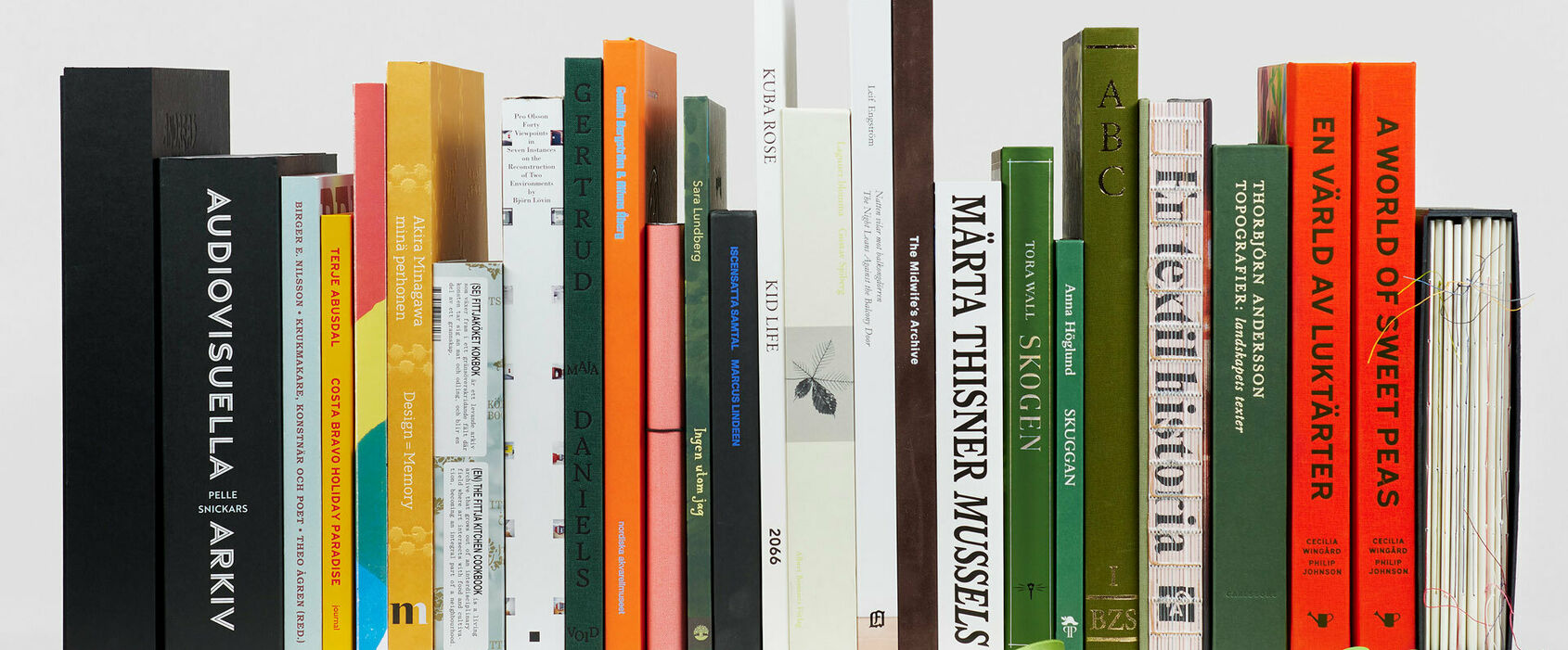
The Swedish Book Art Association (Svensk bokkonst) was founded in 1933 with the aim of highlighting and promoting quality within the book industry. In an annual competition, 25 books are selected based on their technical and aesthetic design. This small exhibition in the Old Library presents the winning books that were printed and produced in 2024.
Svensk bokkonst (The Swedish Book Art Association) is a non-profit association founded in 1933 by the graphic artist and book designer Bror Zachrisson. Its purpose was to promote excellence in Swedish book production. The first exhibition, showcasing a selection of 25 books, was held at the Nationalmuseum the following year. The exhibitions of Svensk bokkonst became an annual event at the Museum, but in 1955 the venue was changed to the Kungliga biblioteket (the National Library of Sweden).Today, the members of the association are various organisations associated with book production. Each year, a jury comprised of five to seven people selects 25 books, adhering to the original idea that the selection “should be based on the principle of the functional and aesthetic adaptation of a book’s design to its content from a typographical and printing perspective.” In other words, the jury focuses on the technical design and aesthetics of the books when making their selection
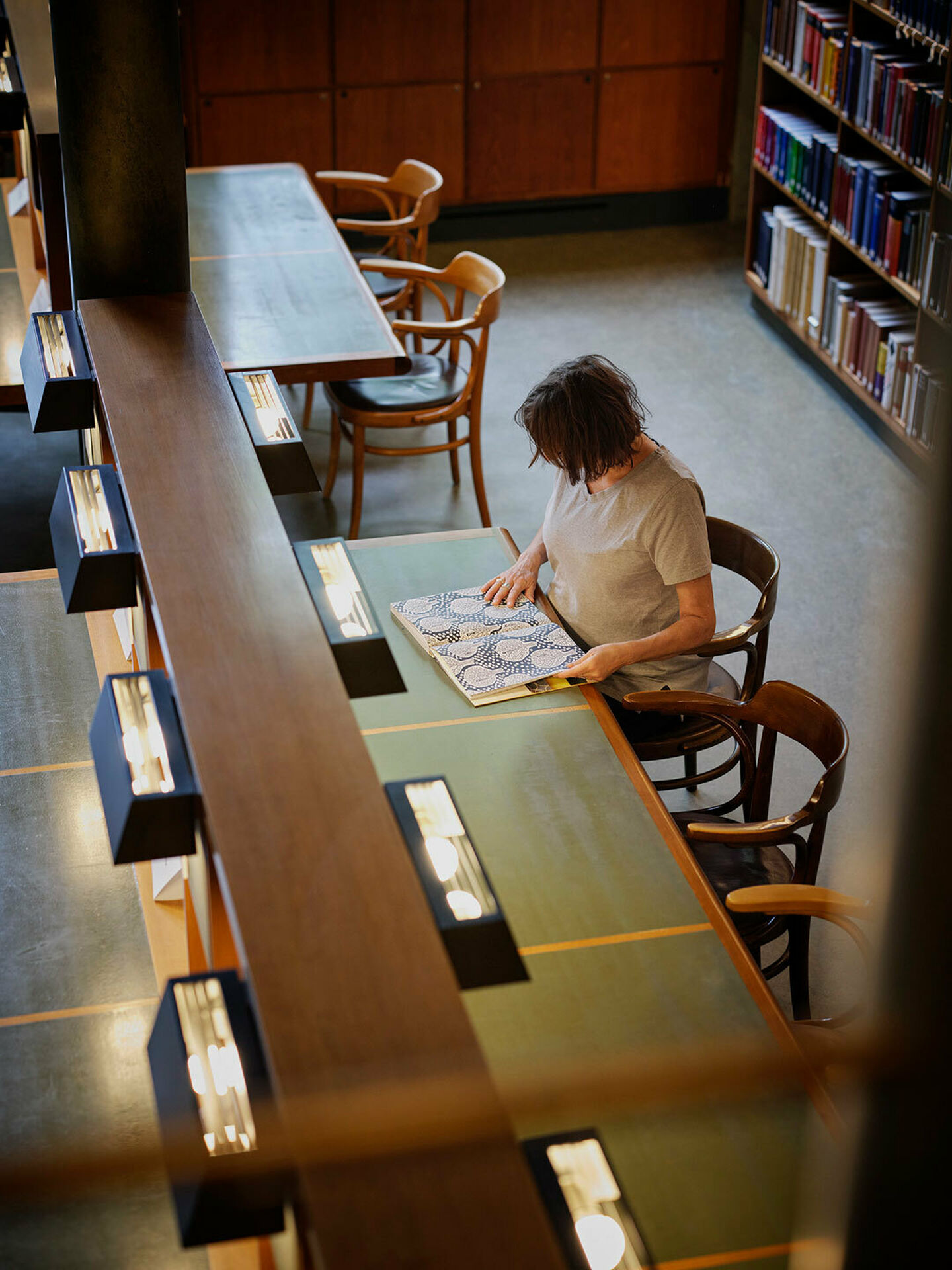
Woman reading one of the winning books in the Old Library.
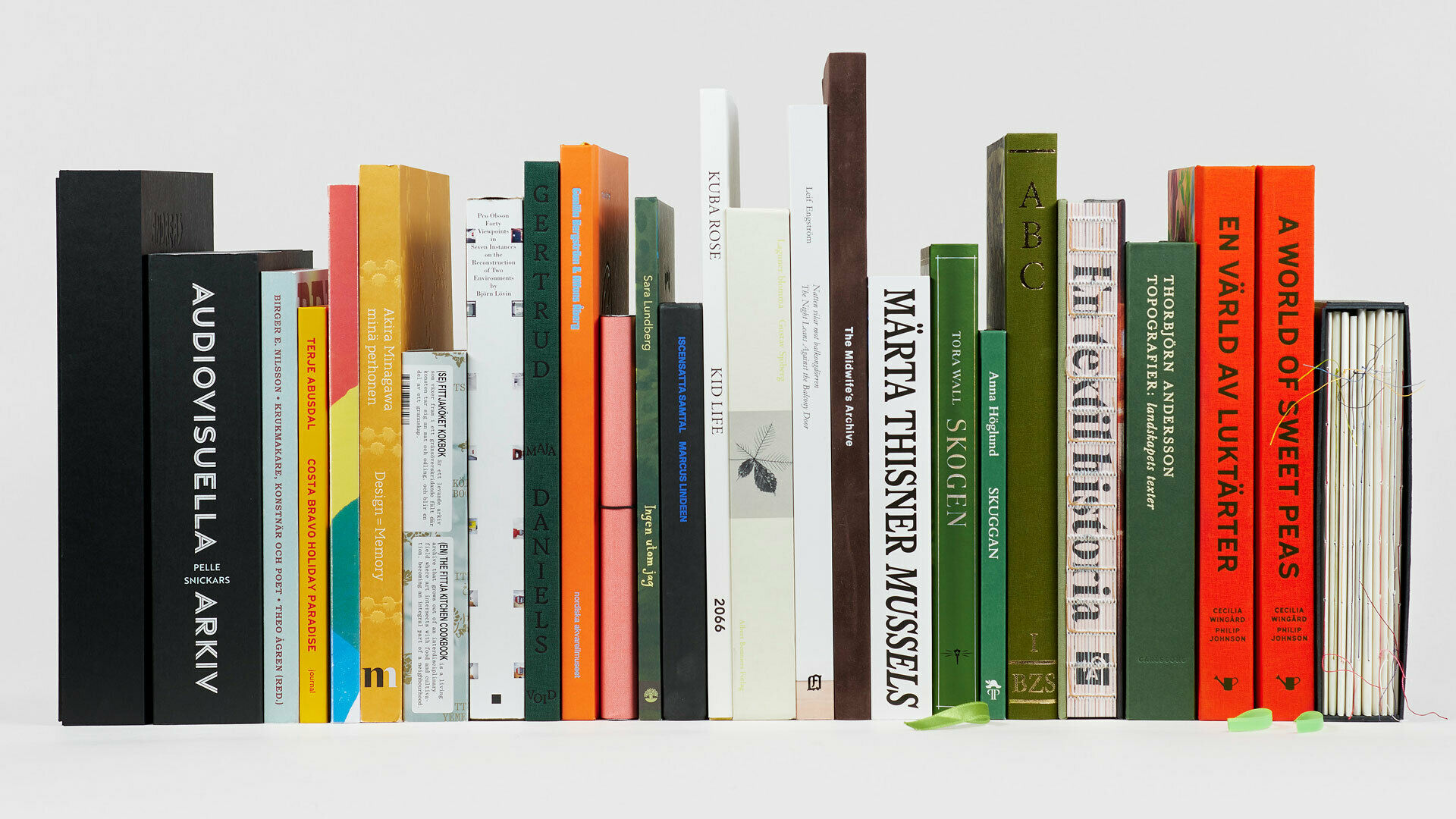
The winning books printed and produced in 2024.
The 2025 competition attracted 240 entries, all printed in 2024. The exhibition at the Old Library presents the 25 winning entries selected by this year’s jury.
Open spines, which are usually common, have this year more often been covered with dust jackets. The Swiss binding, which distinguished several books last year, is even more prevalent this year. In addition, there are several examples of OTA binding, also known as “lay-flat binding”. The name derives from the Finnish company Otava, which patented the technique in 1981. OTA binding is a technique that allows space for movement in the spine, much like a book with an open spine, and therefore provides an excellent opening spread.
Climate awareness is strongly present among this year’s winning books. Clearly evident is a typically contemporary search for new visions in restoration and reuse. There are several examples of local elements, such as books printed in the neighbourhood, hand-sewn volumes, and books created from discarded books and other recycled materials.
Here one senses a desire to re-enchant the world by retreating into nature – the forest, holidays, family life, craftsmanship, myths and magic, memories and nostalgia.