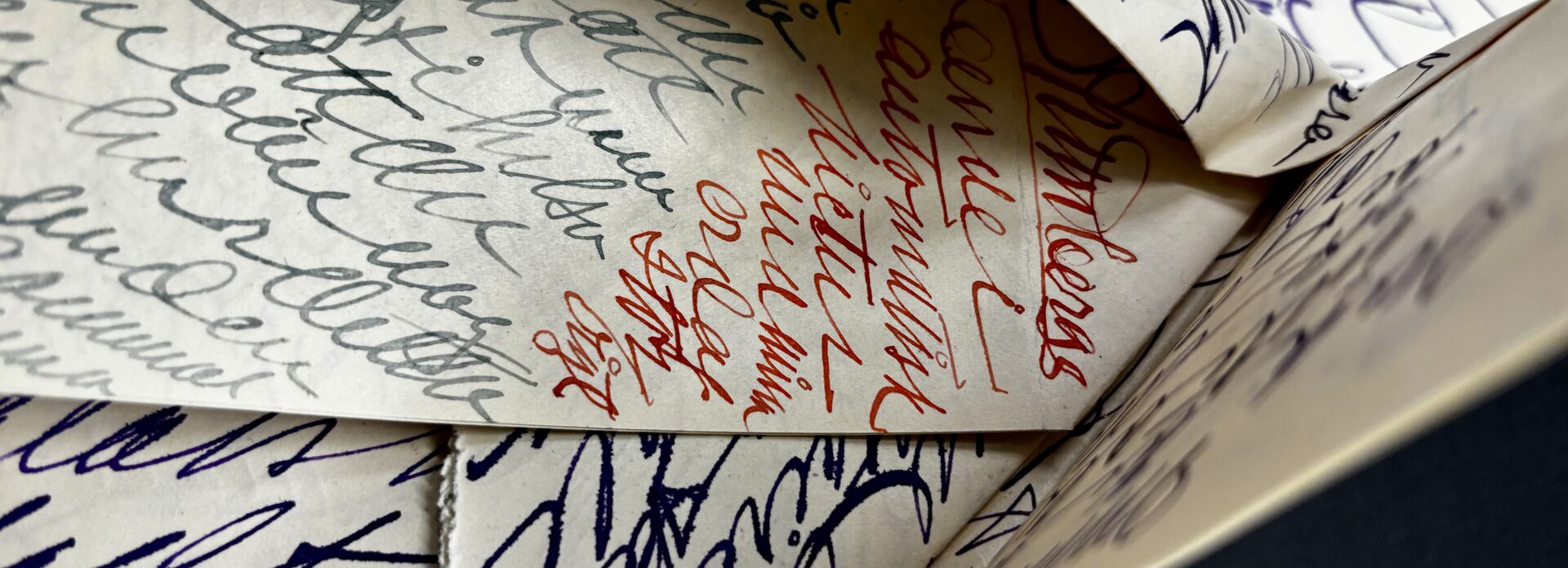
The Konradsberg Collection is one of Sweden’s oldest and most extensive collections of so-called patient art – art created by individuals within psychiatric care. The collection was begun around the turn of the twentieth century by the professor of psychiatry Bror Gadelius (1862–1938). Gadelius used the collection in his research and exhibited it with the ambition, among other things, of fostering a change in attitudes toward more humane forms of care. Patient art points to the intricate relationship between creativity and mental illness – an issue that continues to attract interest within both medicine and the humanities. In 1994, the collection was donated by Karolinska Institutet to the Nationalmuseum.
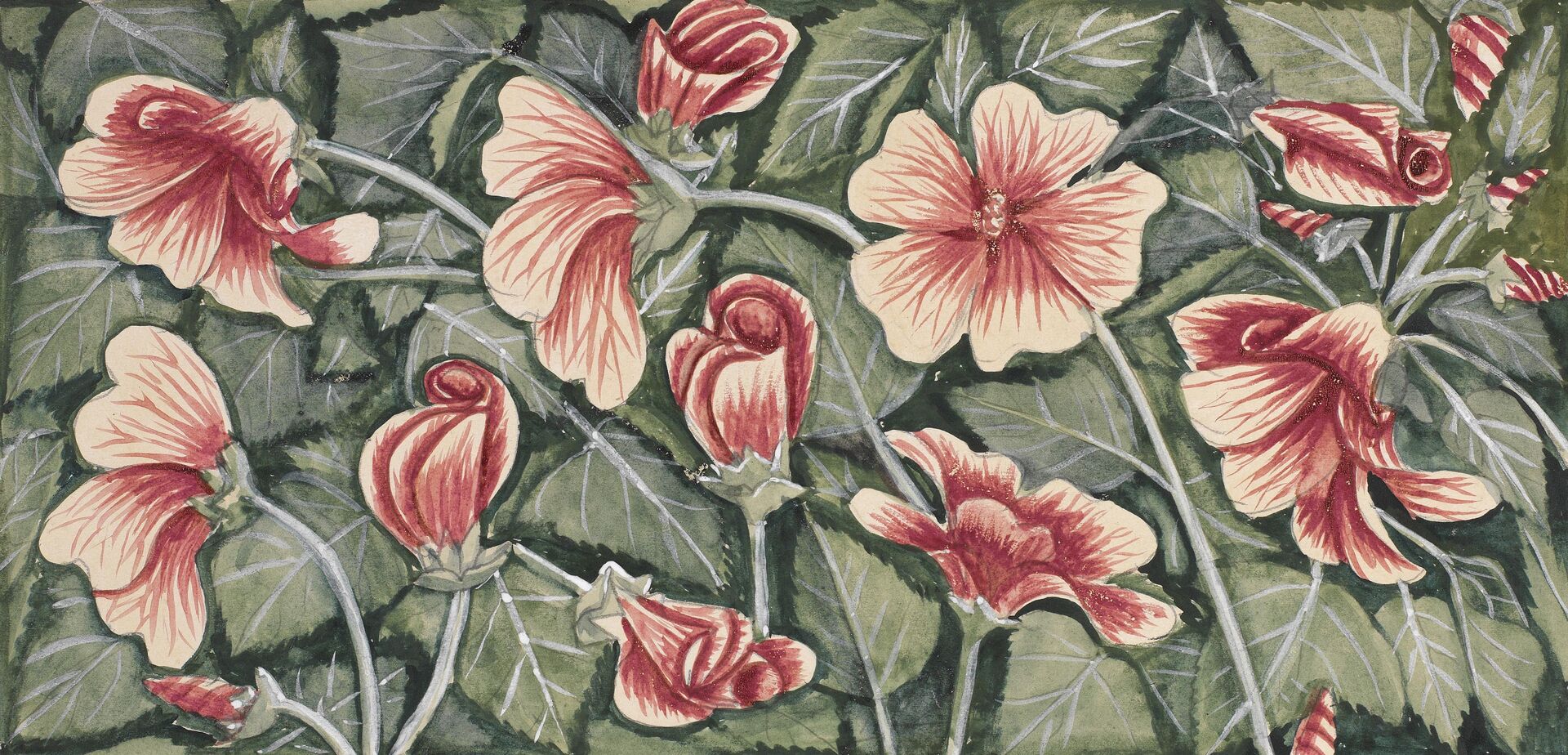
Edvard Gottfrid Fransén “The Flower Painter” (1859-), Small Composition, Konradsberg Collection,
NMH D 189/1994. Photo: Nationalmuseum.
The collection includes works by well-known artists such as Ernst Josephson, Carl Fredrik Hill, and Ester Henning. In this research project, however, the focus is on the artist Ava de Lagercrantz (1862–1938). She was an internationally active portrait painter with a career in Paris, New York, and Stockholm, but is today relatively forgotten. Within the Konradsberg Collection, she is one of the most extensively represented artists, with hundreds of sheets filled with automatic writing and drawings, often addressed to doctors and friends. In these texts, she allows, among others, the spirit of August Strindberg to speak through her. This material differs markedly from Lagercrantz’s earlier works, which were characterized by classical portrait painting and miniatures. In her own time, however, the connections between art, spiritualism, and theosophy were strong, with Hilma af Klint being the most well-known example.
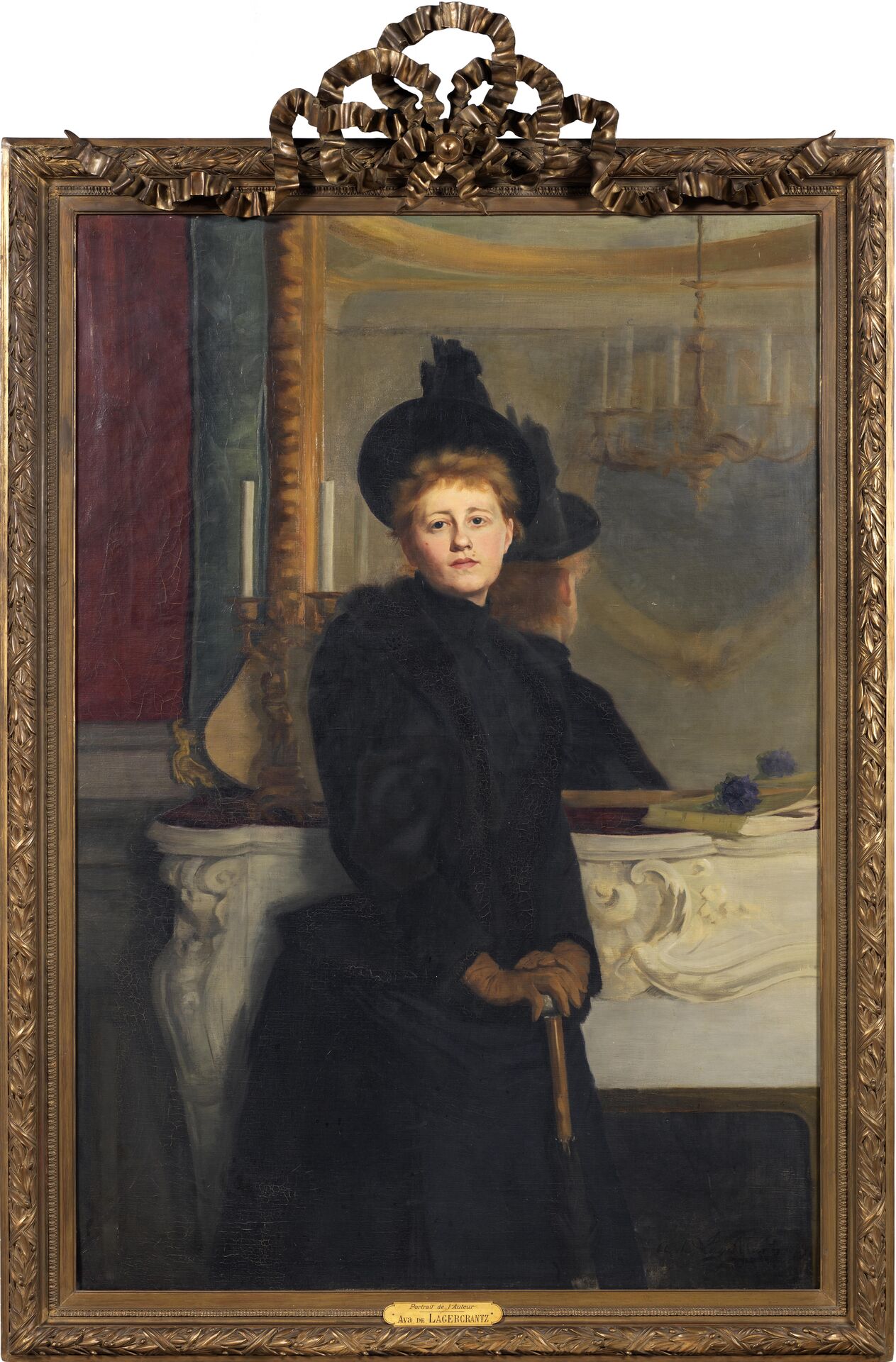
Ava de Lagercrantz (1862–1938), Self-Portrait, NMGrh 5091. Photo: Anna Danielsson/Nationalmuseum.
The project aims to nuance the concept of patient art and to investigate how Lagercrantz’s artistic practice developed before, during, and after her time at Stockholm Hospital (1923–1931). It is not only about understanding the art created during illness, but about viewing it as part of an artistic life’s work. By highlighting Lagercrantz’s oeuvre, the research hopes to contribute to a deeper understanding of the place of patient art in Swedish art history, beyond simplified boundaries between illness and health, center and periphery.
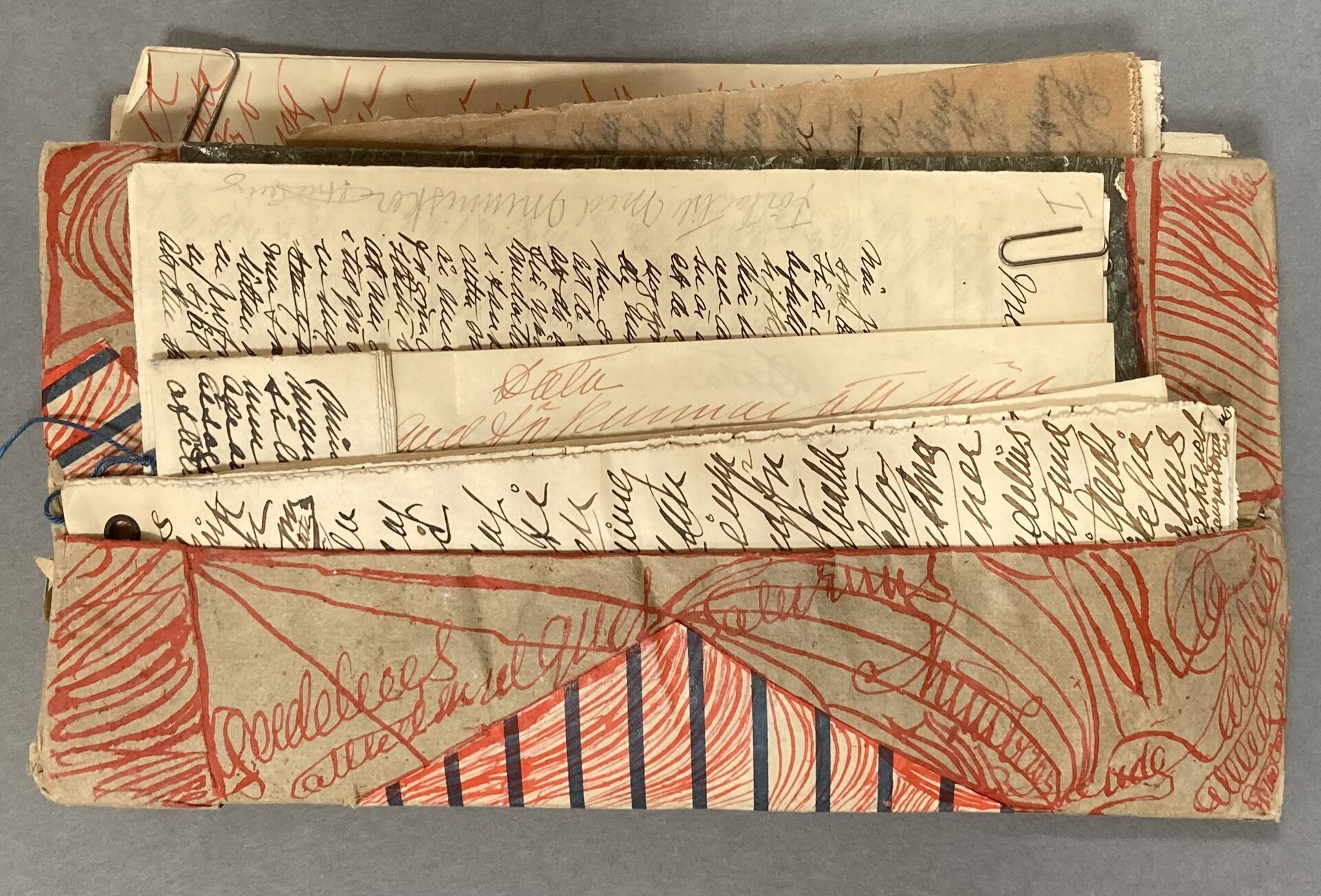
Ava de Lagercrantz (1862-1938), Automatic writing, dated c. 1925–1930, Konradsberg Collection.
Photo: Hedvig Mårdh.
Duration
2026–2028
Funding
The project is funded by the Berit Wallenberg Foundation.
Contact
hedvig.mardh@nationalmuseum.se
Do you have a work by Ava Lagercrantz at home?
Your help is needed to map Ava (Gustava) Lagercrantz's production! If you have knowledge of drawings, miniatures and paintings by Ava Lagercrantz as well as photographs, letters and other archive material with a connection to the artist – please contact researcher Hedvig Mårdh, hedvig.mardh@nationalmuseum.se.