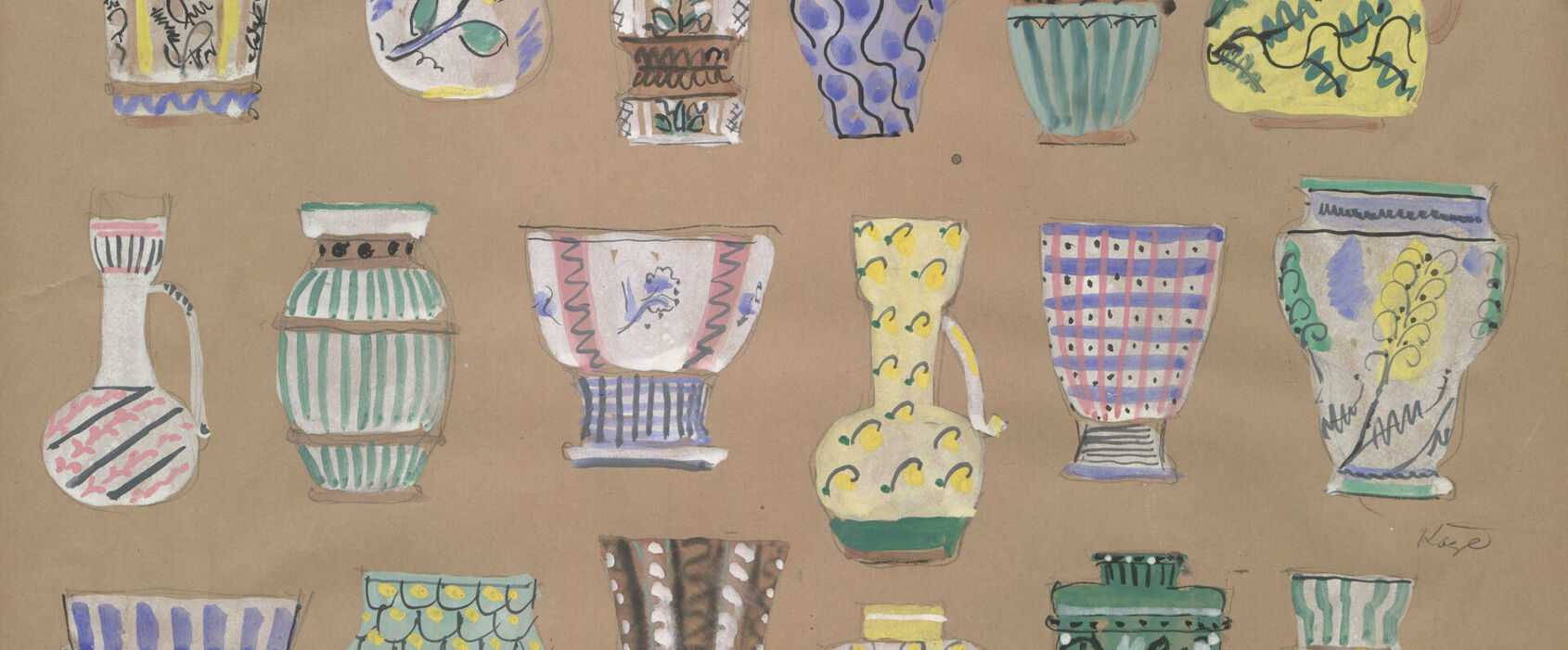
Wilhelm Kåge (1889–1960) is regarded as one of Sweden’s most significant designers of all time. In connection with the Nationalmuseum’s current exhibition Wilhelm Kåge & Shōji Hamada, a selection of archival material – sketches, drawings, photographs, and printed matter – concerning Wilhelm Kåge is featured in the Old Library.
Wilhelm Kåge (1889–1960) is regarded as one of Sweden’s most significant designers of all time. In 1917, he was commissioned by the Gustavsbergs porslinfabrik (The Gustavsberg Porcelain Factory) to prepare the company’s participation in the major exhibition organised by the Svenska Slöjdföreningen (The Swedish Society of Crafts and Design) at Liljevalchs Konsthall – the Hemutställningen (The Home Exhibition). The exhibition opened that same year and presented furniture and everyday objects designed to meet the needs and financial means of the working class. At this point, Kåge had not yet worked with ceramics. He had trained as a visual artist and graphic designer, primarily active as a poster artist, illustrator, and woodcut printmaker. Kåge also designed the exhibition poster for the Hemutställningen.
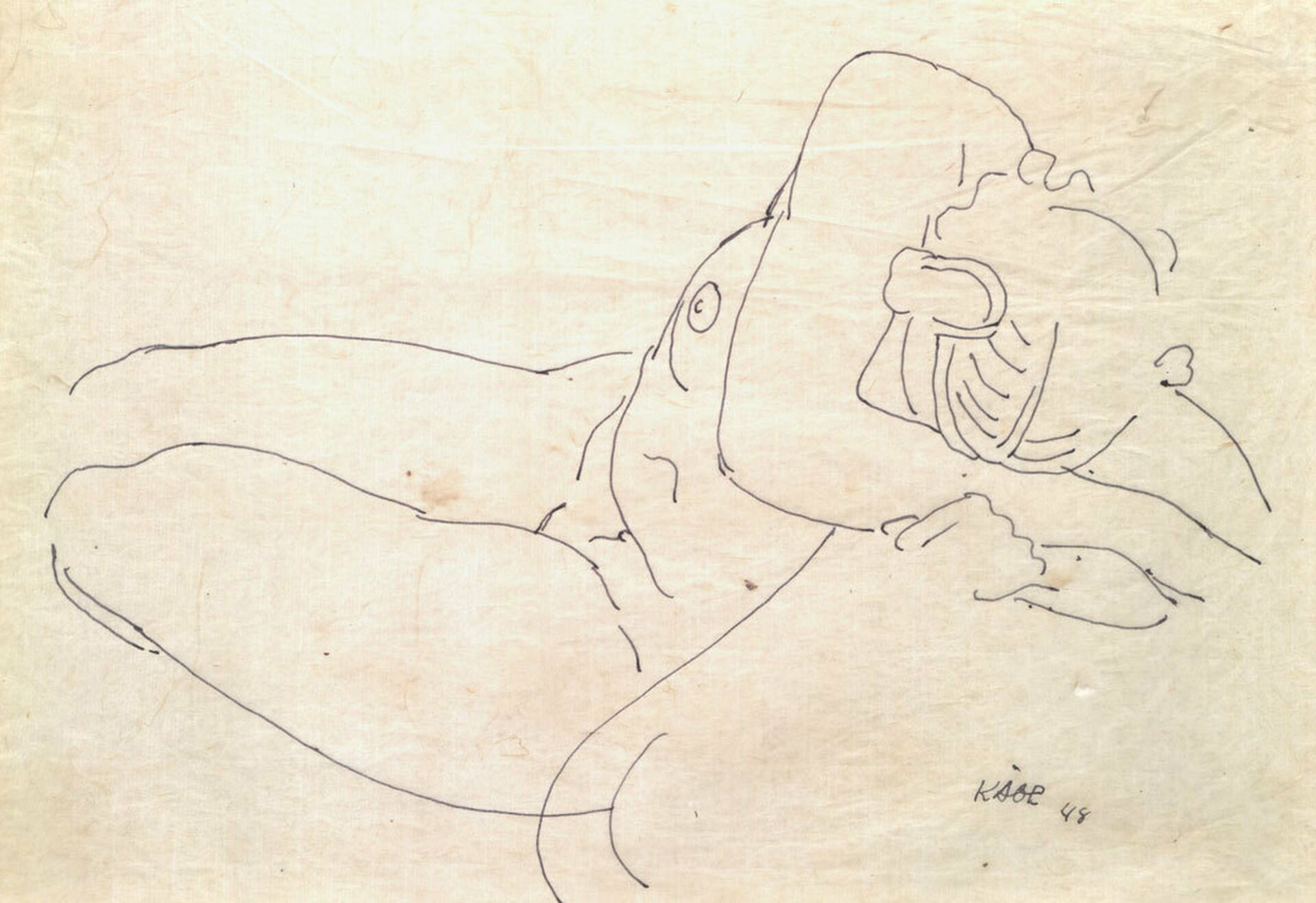
Wilhelm Kåge, croqui drawing.
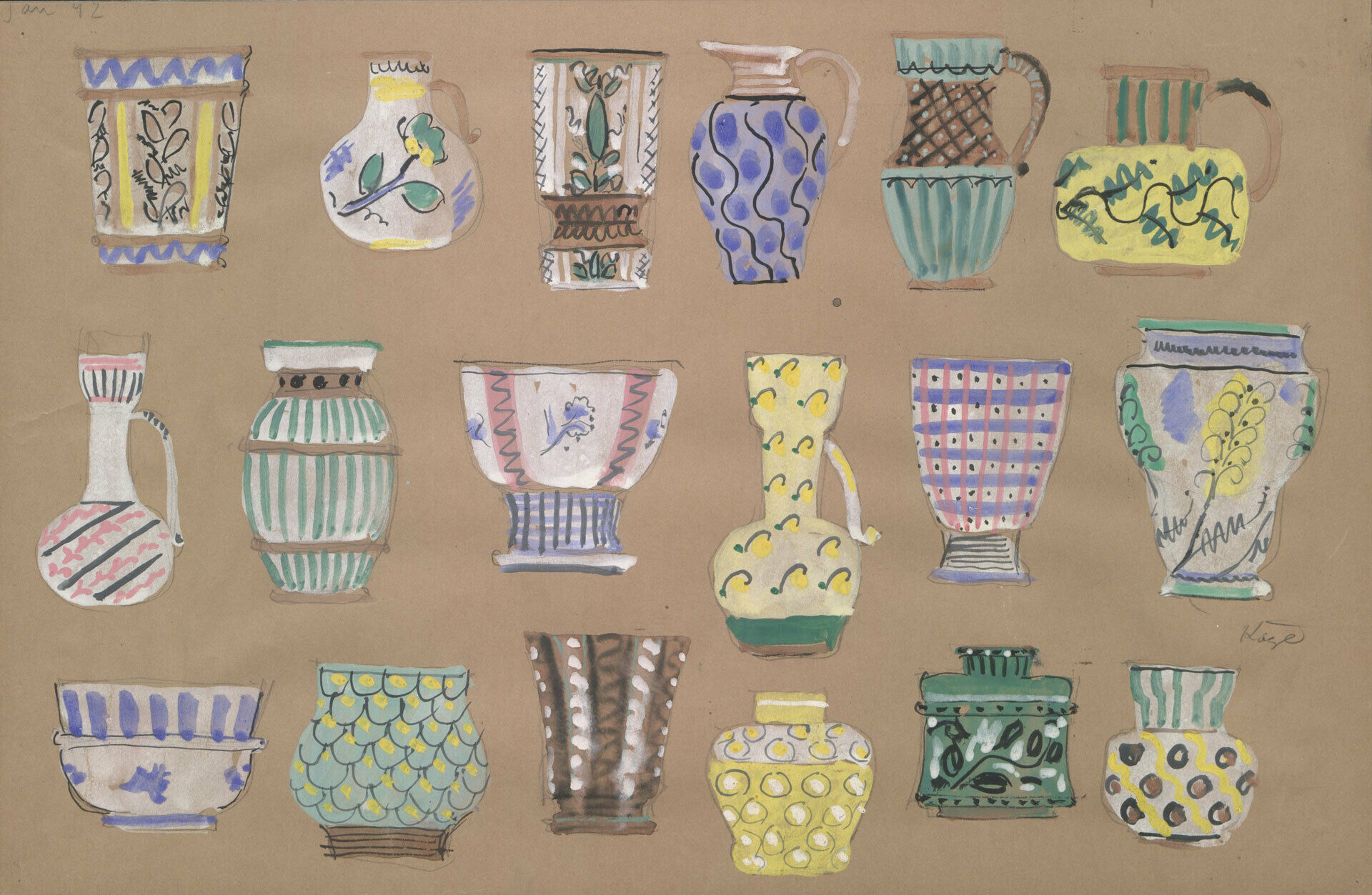
Wilhelm Kåge, sketches of vase models and decors.
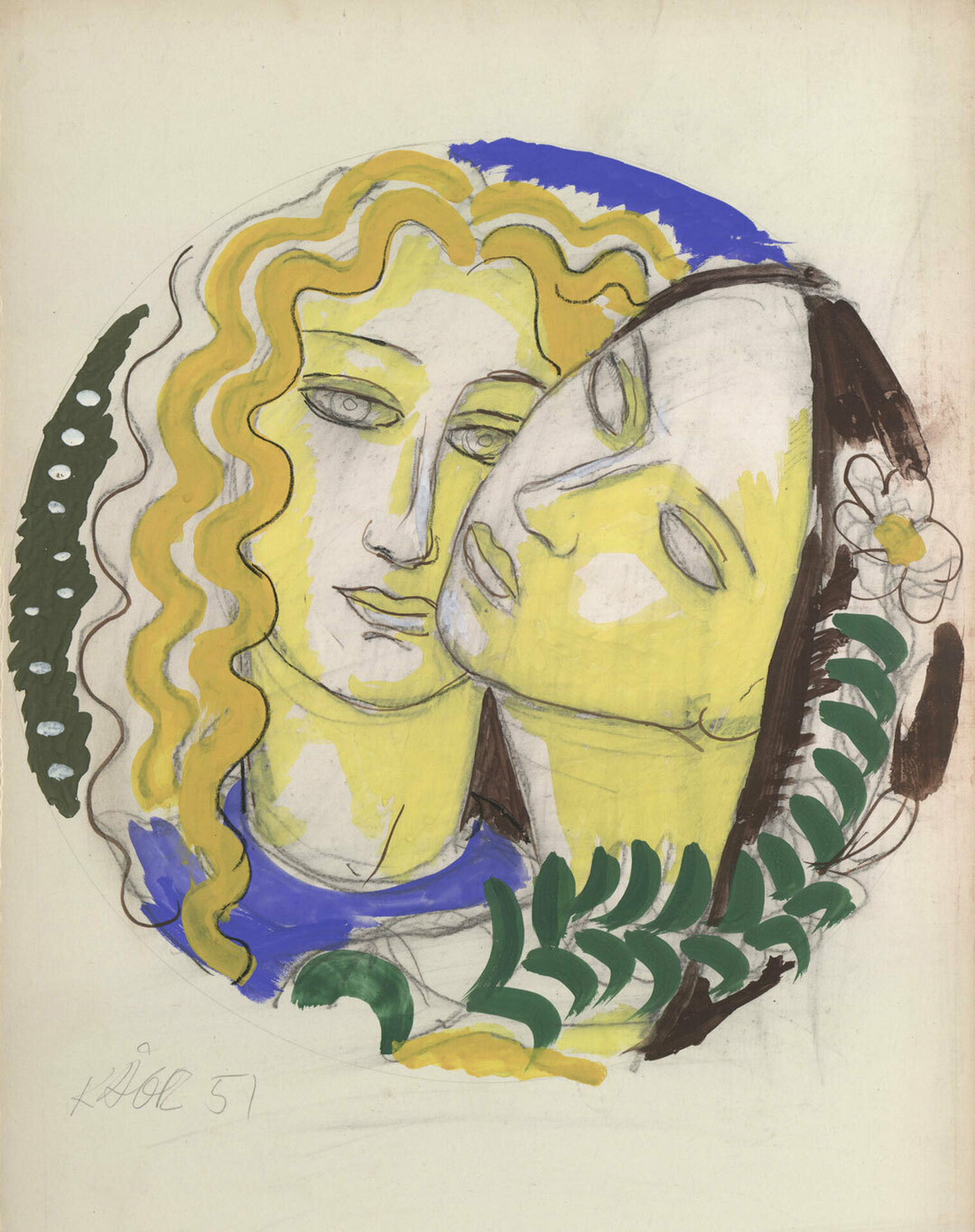
Wilhelm Kåge, drawing.
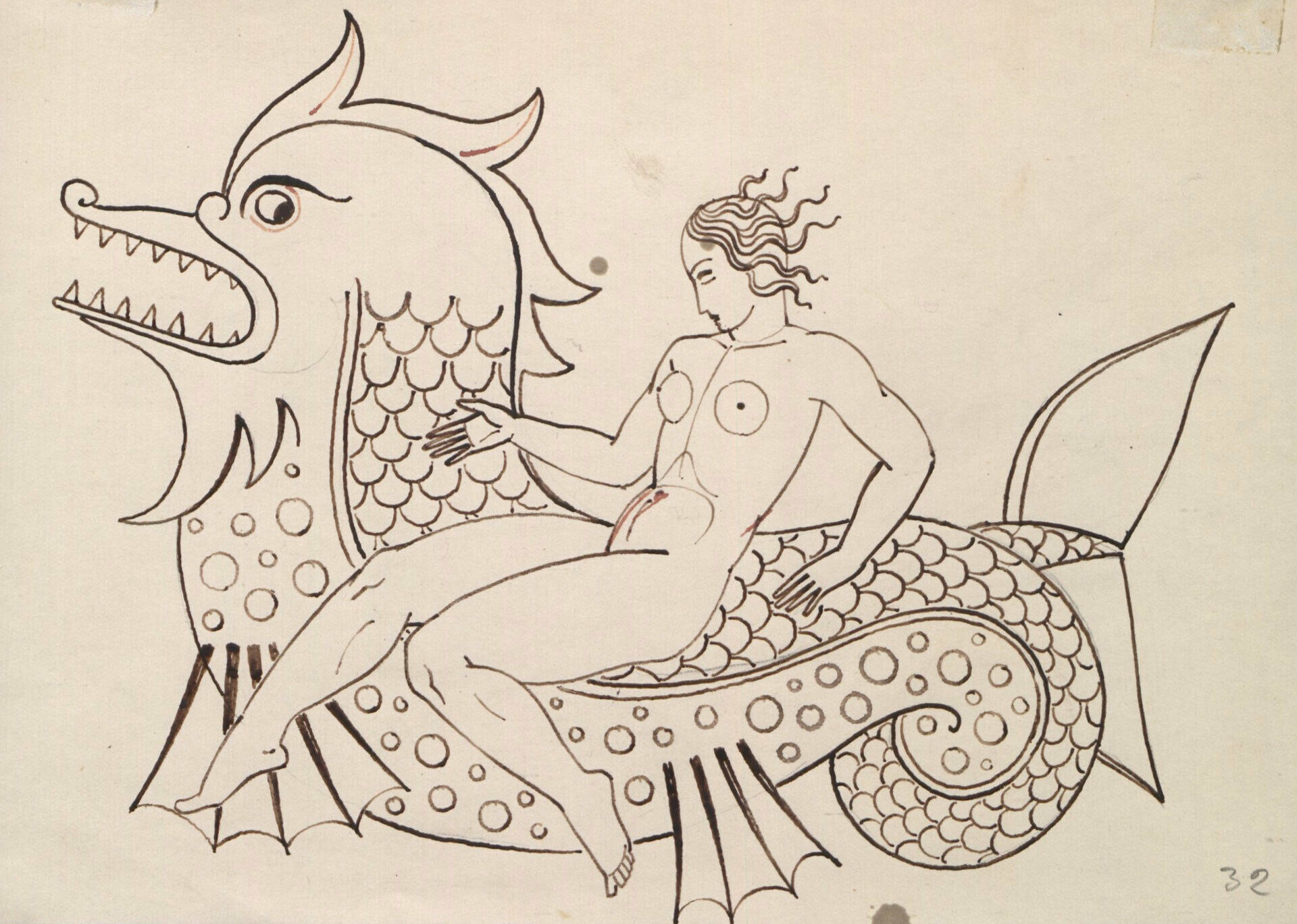
Wilhelm Kåge, decor for Argenta.
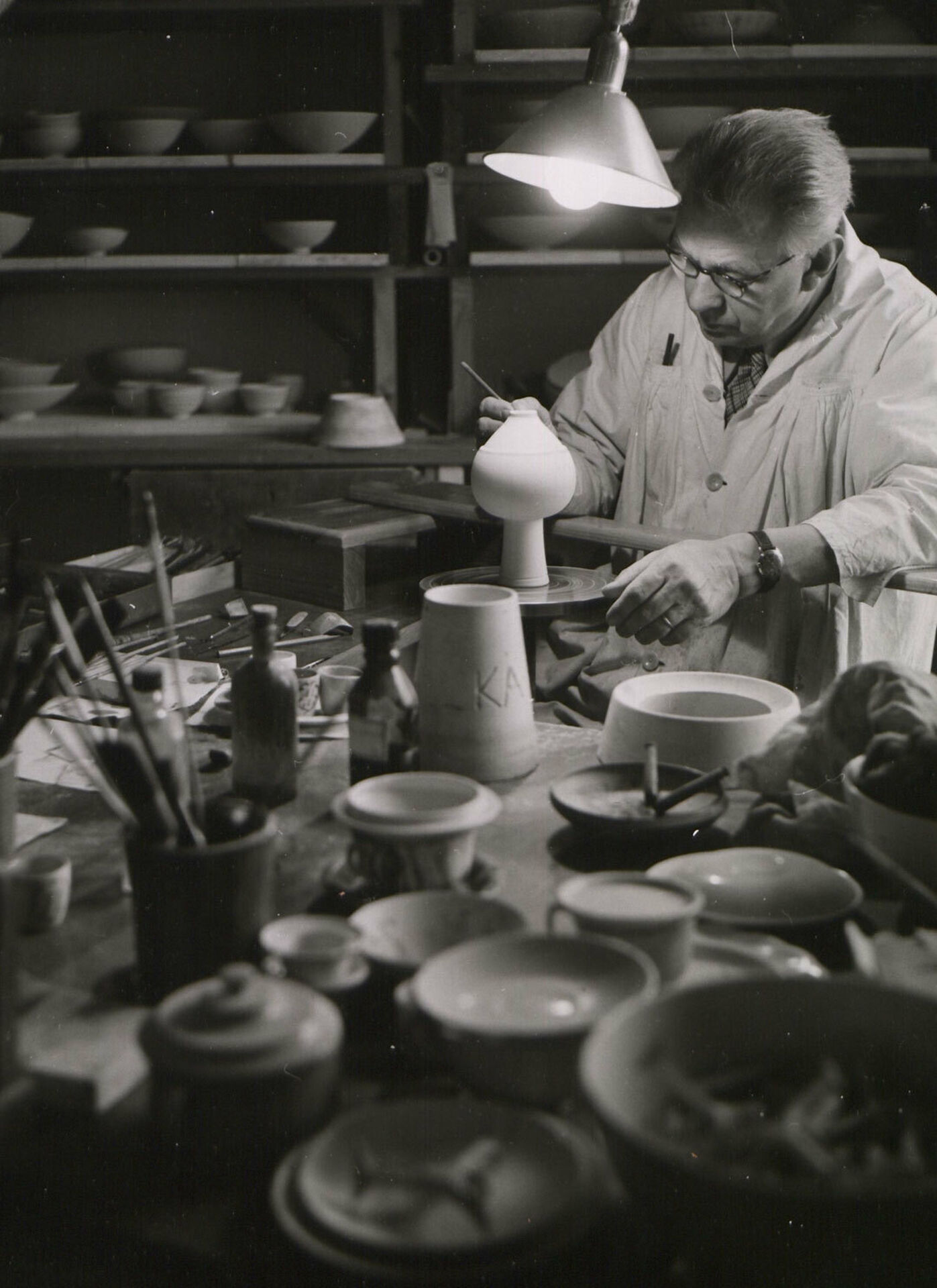
Wilhelm Kåge by the banding wheel.
During the following decades, Kåge worked both at Gustavsberg and as a graphic designer, and decorative painter. In 1929, he designed Pyro, an ovenproof tableware service launched at the Stockholm Exhibition of 1930. The same exhibition also introduced Kåge’s exclusive art pottery series, Argenta, characterised by its green glaze and silver decoration.
The archive contains numerous sketches for Argenta, as well as many sketches for Kåge’s colourful faience dishes and vases first launched in 1942. That same year, the Gustavsberg Studio was established, a division of the factory dedicated to artistic experimentation.
The croquis drawings and sketches preserved in the Nationalmuseum archives testify to Wilhelm Kåge’s exceptional ability to convey movement and form through line.
The sketches, drawings, photographs, and printed matter originate from the Gustavsbergs Porslinsmuseum (The Gustavsberg Porcelain Museum), owned by the Kooperativa förbundet (KF) (The Swedish Cooperative Union) since 1937. In 2000, KF donated the extensive Gustavsberg collection to the Swedish state, and since then it has been preserved and made accessible by the Nationalmuseum.
Curious about Kåge? Find out more i the Wilhelm Kåge & Shōji Hamada exhibition's web page.