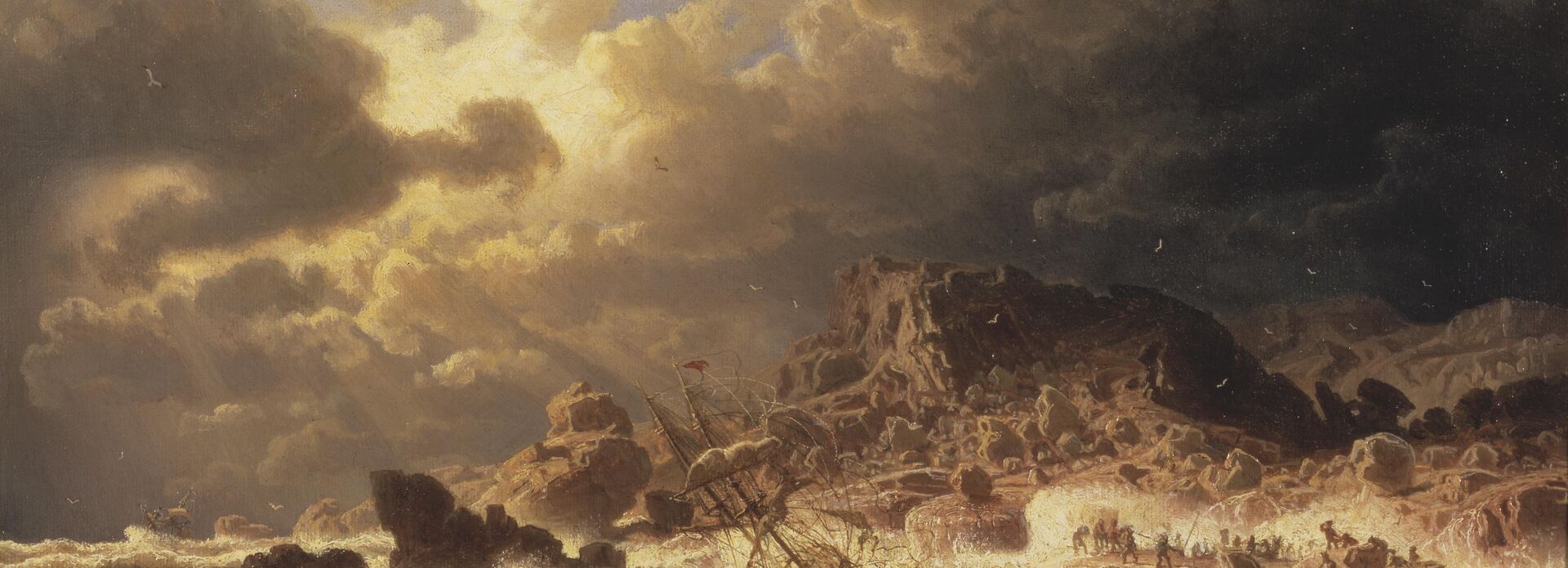
The painter Simon Marcus Larson (1825–1864) is among the major figures in nineteenth century Swedish art, trained in Düsseldorf and at the Royal Academy of Fine Arts in Stockholm. Biographical accounts of his artistic career emphasize both his virtuosity and his flair for dramatic effects. His life is described as “stormy,” which may sound like a pun considering his favourite motifs of nature in upheaval, but it is also with regard to this turbulence that a renewed interest in his work appears justified.
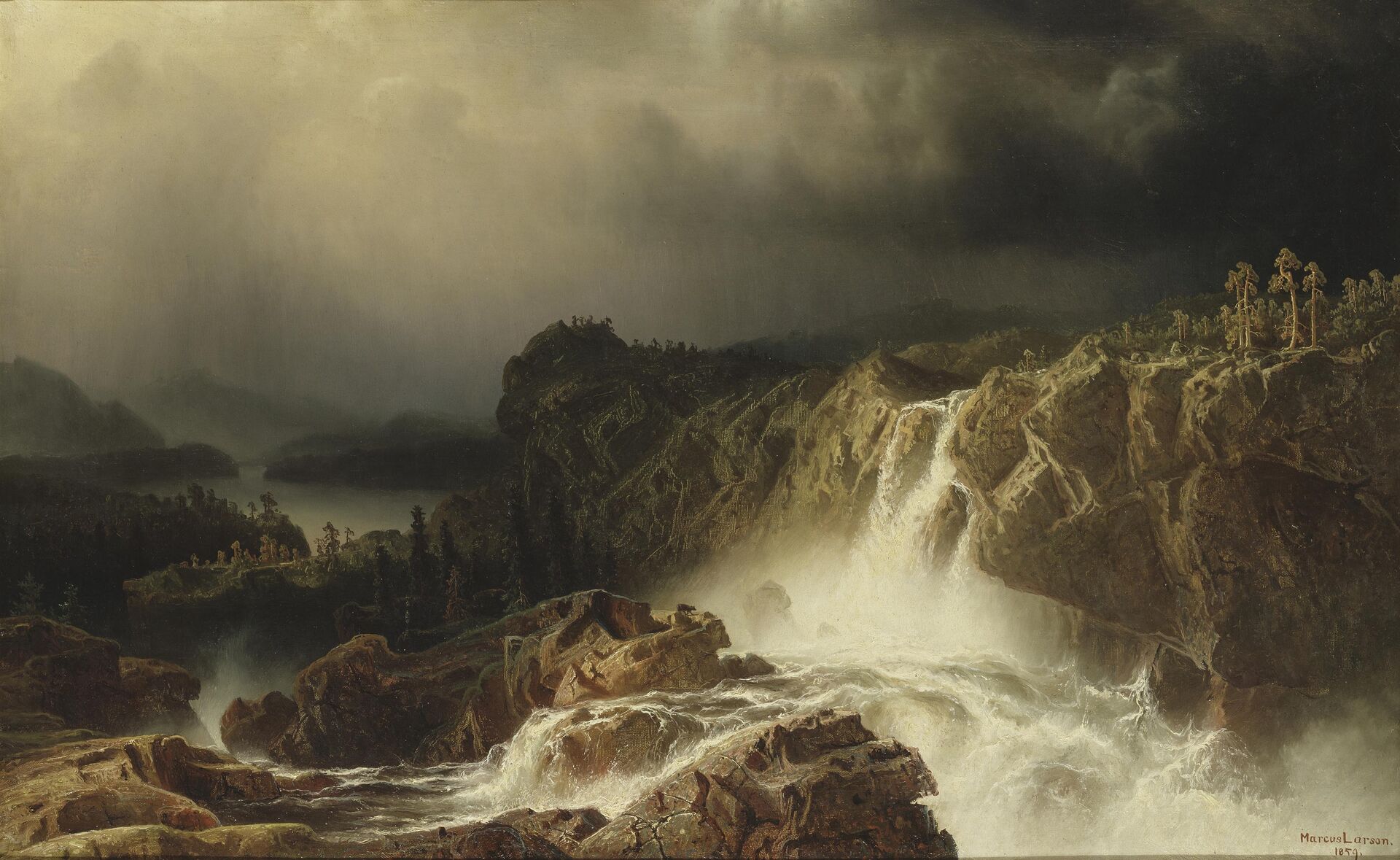
Marcus Larson (1825–1864), Rocky Landscape with Waterfall, NM 2752. Photo: Anna Danielsson/Nationalmuseum.
The artist himself has been likened to a rapid, a hurricane, and a “meteor that shone, dazzled, and faded away” (Nordensvan, 1892). Today, as humanity’s destructive impact – not only on nature or the environment, but on the planet and the Earth system – has become evident, this art of extreme weather gains renewed relevance. His oeuvre merits analysis and reflection that take into account our transformed state of nature, now referred to as “the new climate regime” (Latour, 2018).
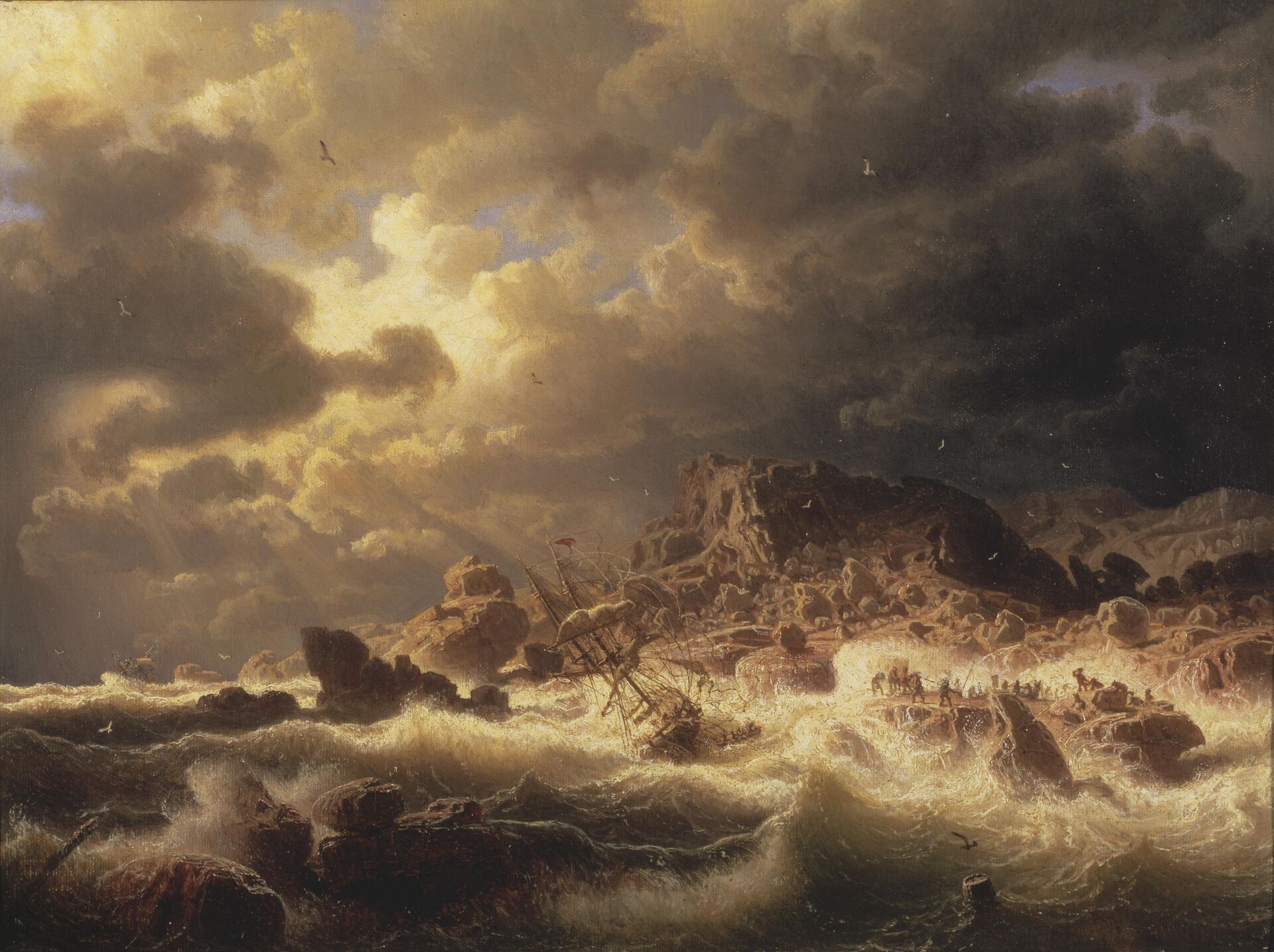
Marcus Larson (1825–1864), Gale on the Bohuslän Coast, NM 1215. Photo: Nationalmuseum.
The project will result in a book that analyzes, from discursive, narratological, and historiographical perspectives, the texts about Larson and his closest art-historical context. Drawing on research into materiality, temporality, and the climate crisis, this body of work – from close analysis of the paintings to the study of what has been written about them – will be reexamined.
Duration
Until June 2027
Funding
The project is funded by the Berit Wallenberg Foundation.
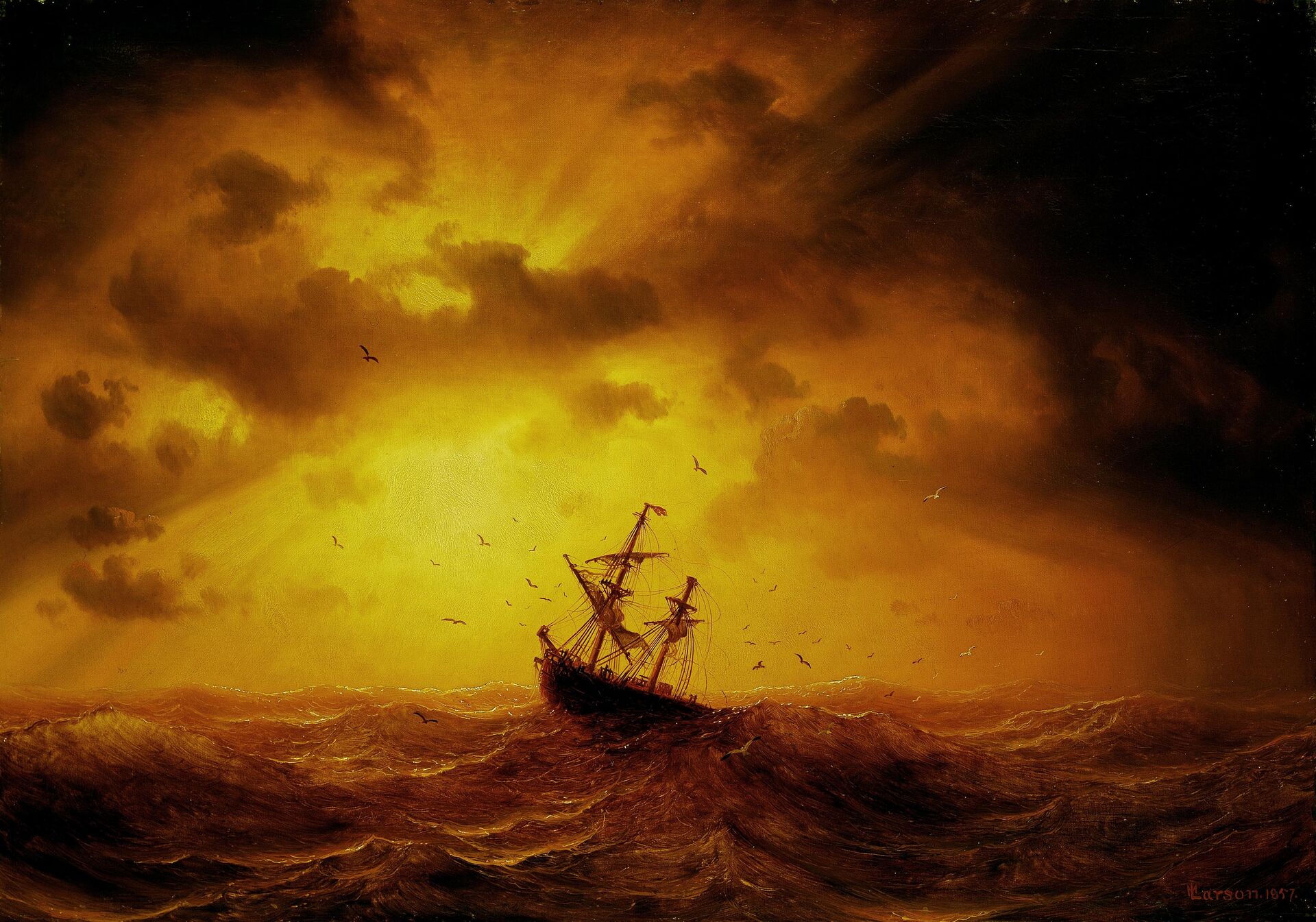
Marcus Larson (1825–1864), Stormy Sea, NM 6336. Photo: Nationalmuseum.
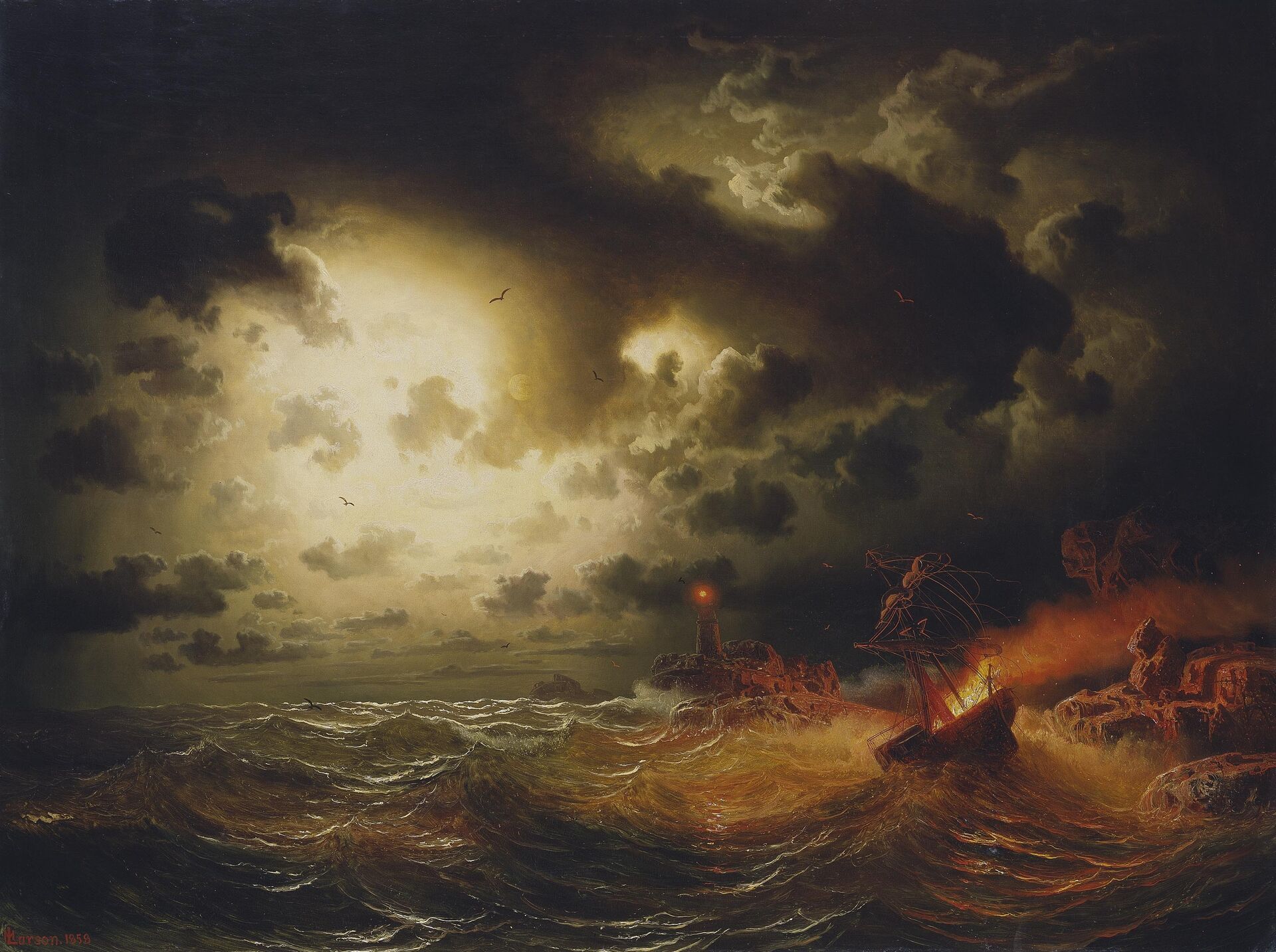
Marcus Larson (1825–1864), Burning Steamer, NM 1214. Photo: Nationalmuseum.
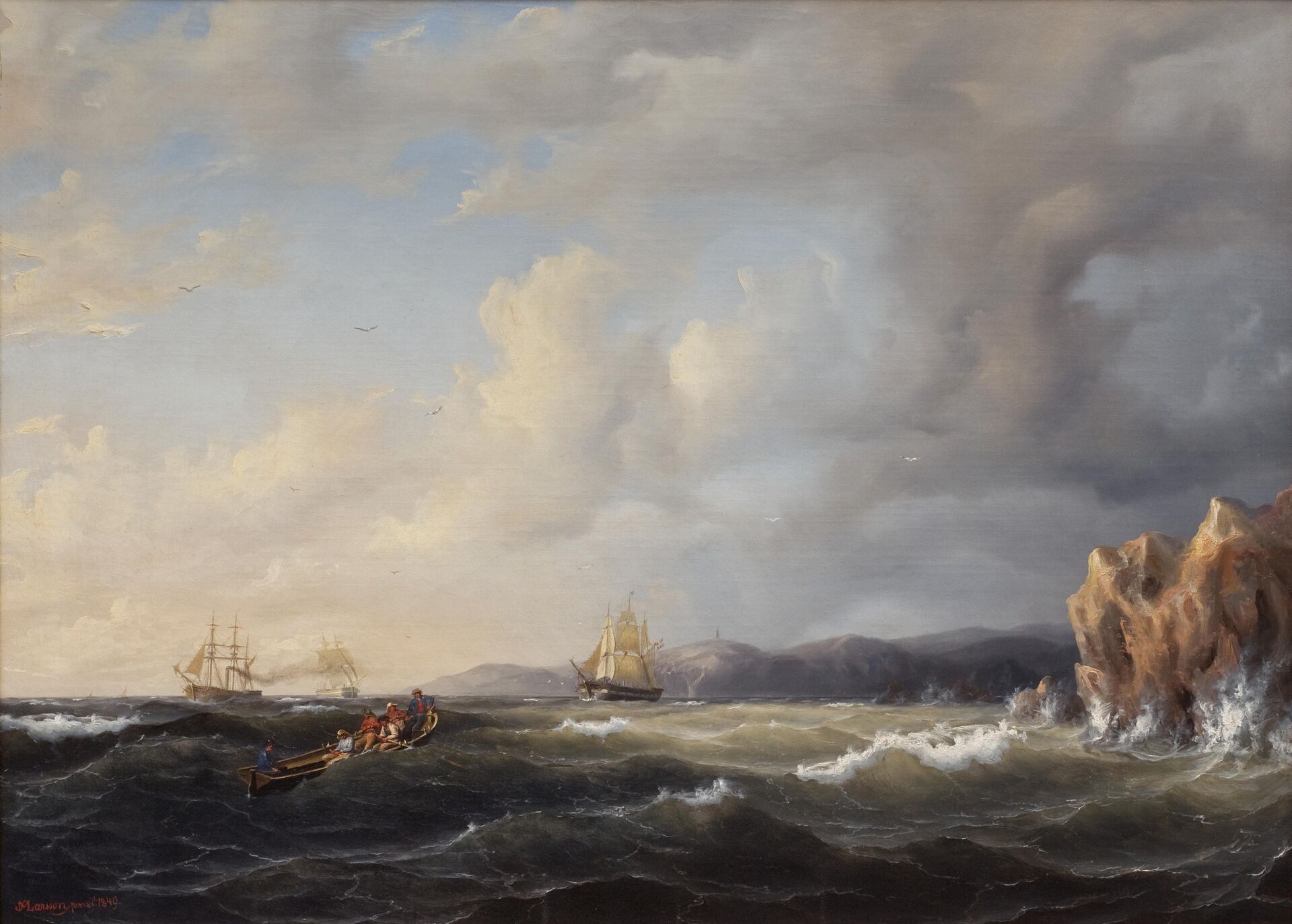
Marcus Larson (1825–1864), Barque Beating to Windward at Kullaberg, NM 4785. Photo: Nationalmuseum.
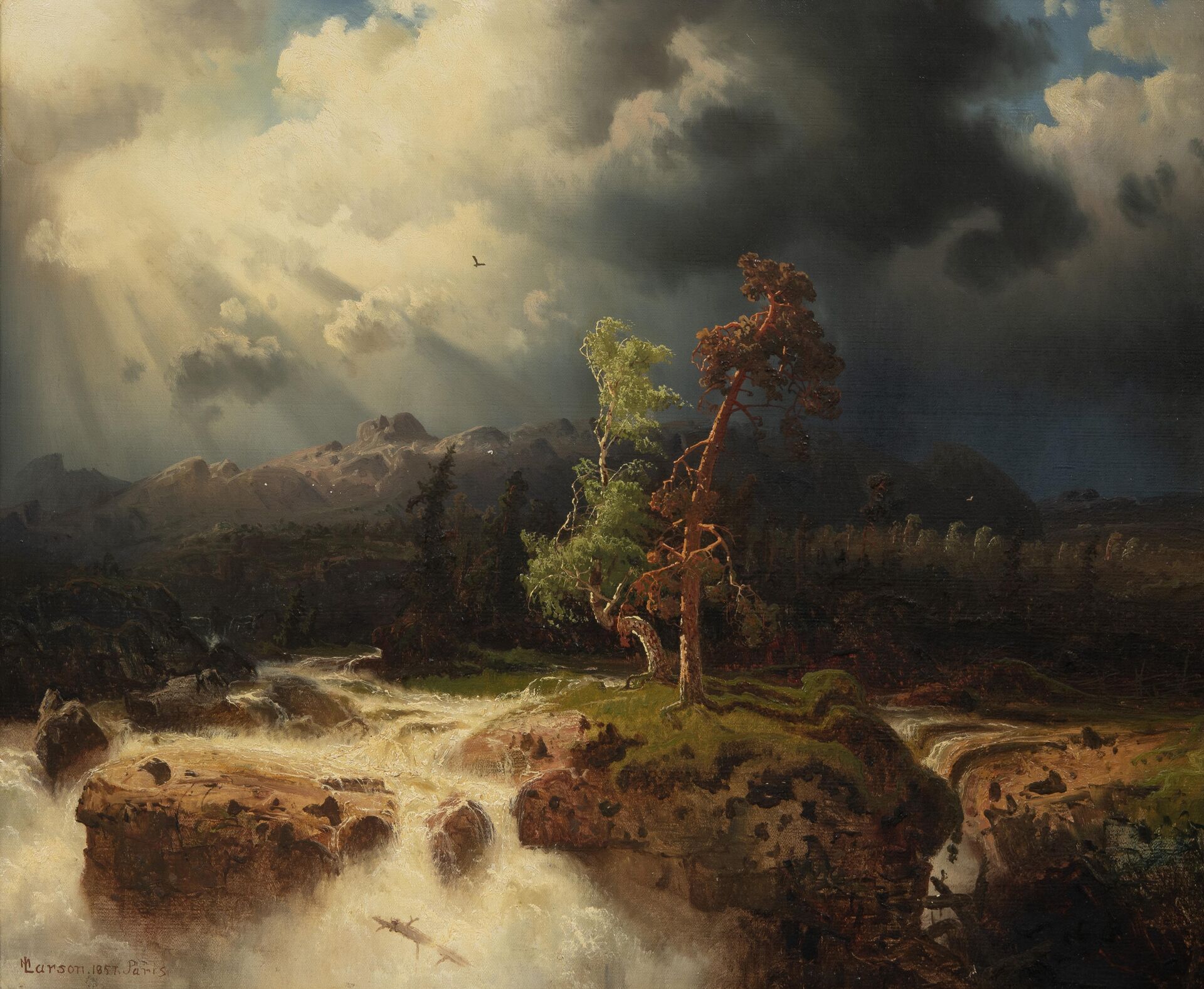
Marcus Larson (1825–1864), Mountain Scenery, NM 4787. Photo: Anna Danielsson/Nationalmuseum.
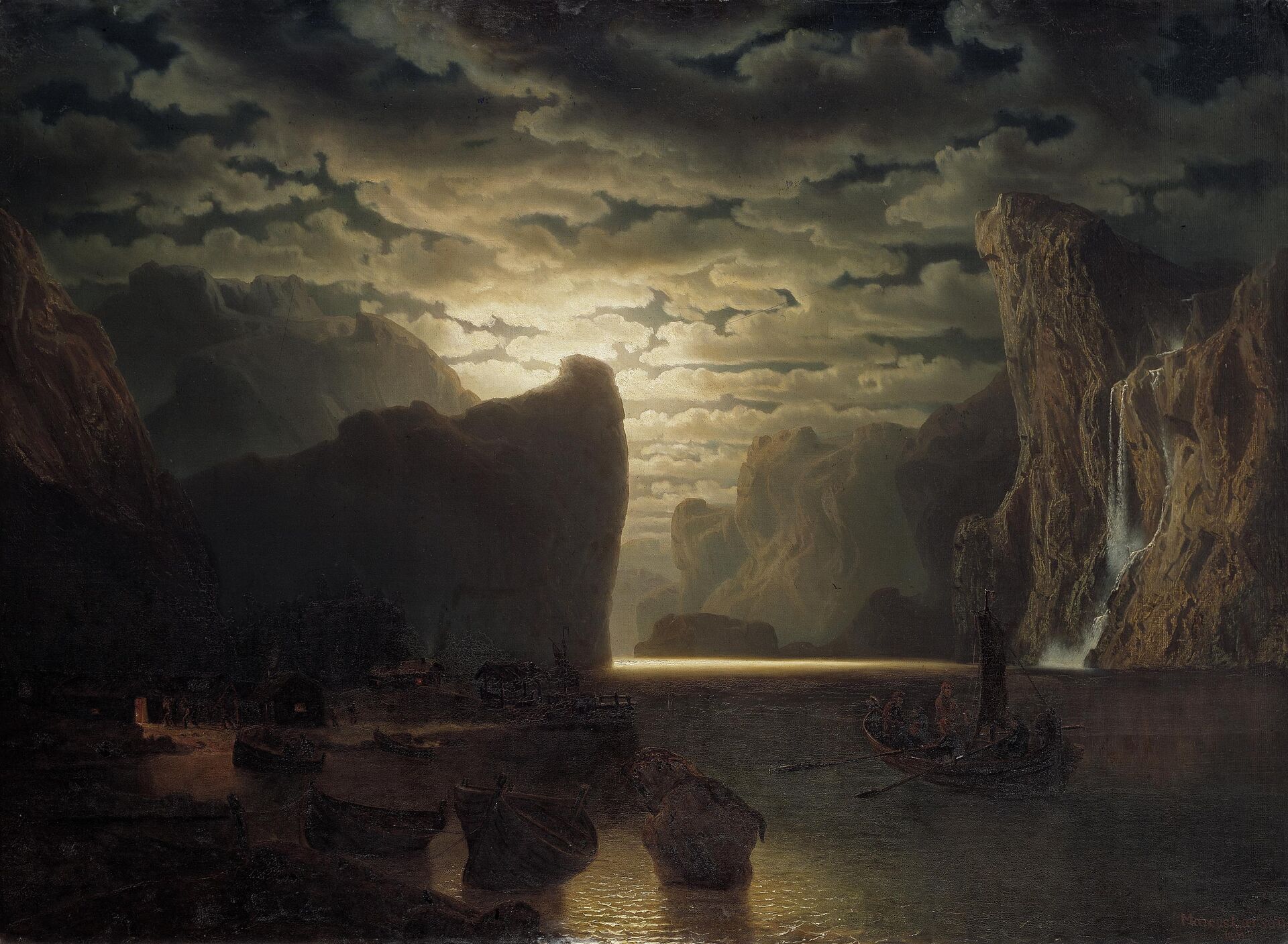
Marcus Larson (1825–1864), Norwegian Fjord in Moonlight. Motif from the Sognefjord, NM 2000. Photo: Nationalmuseum.
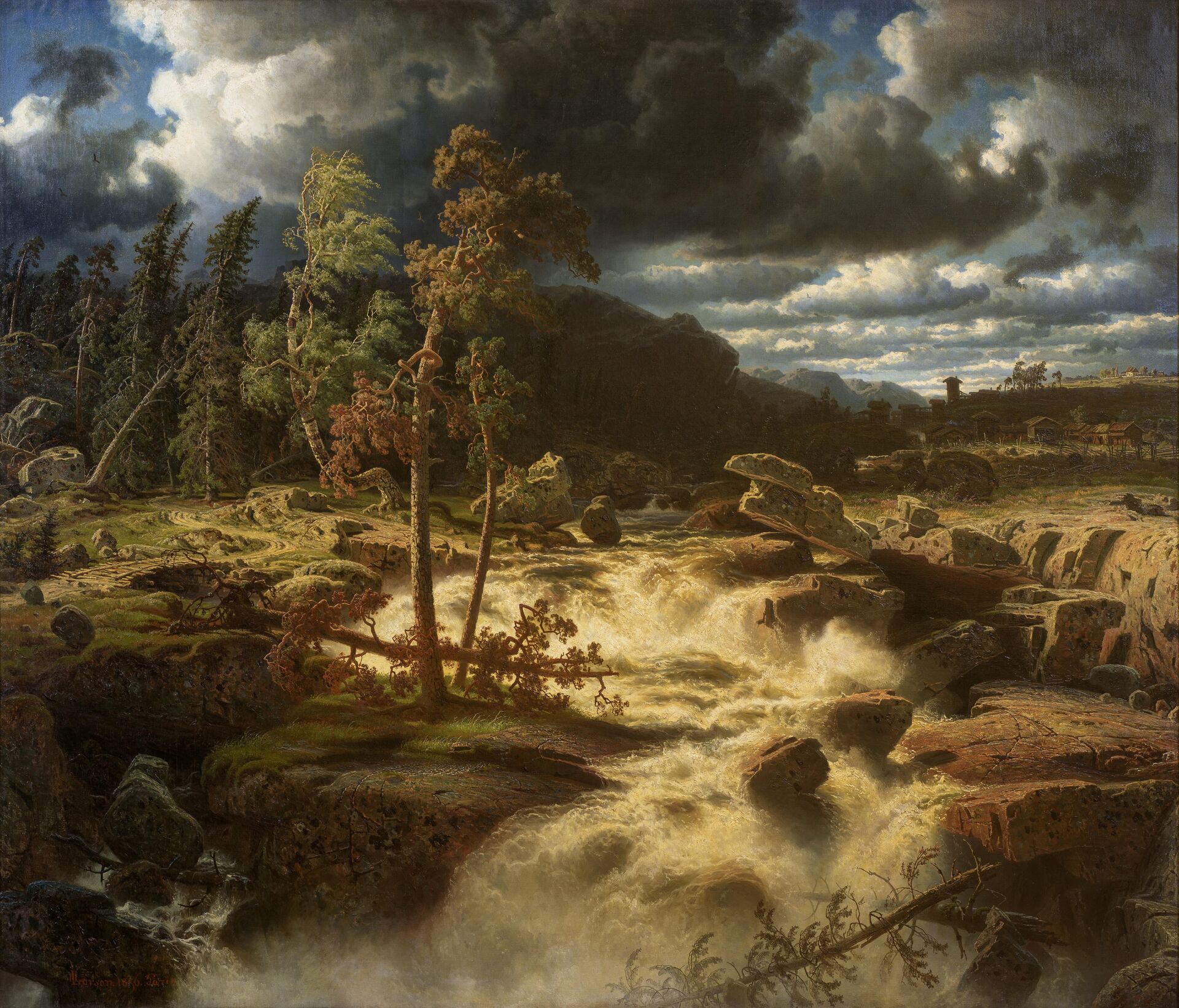
Marcus Larson (1825–1864), Waterfall in Småland, NM 1713. Photo: Anna Danielsson/Nationalmuseum.